


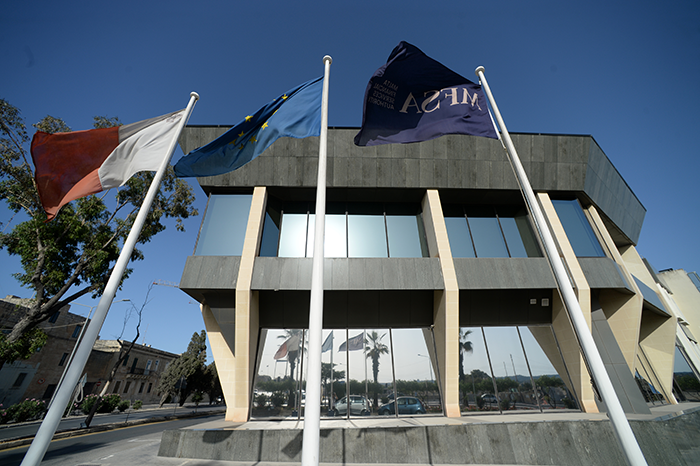
Malta is taking a formal step towards overhauling how financial trades are completed, with the Malta Financial Services Authority and the Central Bank of Malta announcing the creation of a national coordination group to oversee the country’s transition to a T+1 securities settlement cycle.
The move aligns Malta with a broader EU-wide initiative to shorten settlement times, with a coordinated transition across Europe expected by no later than 11th October 2027.
What does ‘T+1 settlement’ mean?
In simple terms, when investors buy or sell financial instruments such as shares or bonds, the transaction is not completed instantly. There is a short delay, known as the settlement cycle, before ownership is officially transferred and payment is finalised.
- T refers to the trade date (the day the deal is agreed)
- +1 means the transaction must be fully completed one working day later
Currently, many markets operate on a T+2 basis (two days after the trade). Moving to T+1 reduces that timeframe, meaning trades are finalised faster.
To manage the transition locally, Malta has set up a T+1 National Coordination Group (NCG), which will act as the central forum for decision-making and implementation.
The structure reflects the roles of the key institutions involved:
- The MFSA will act as Chair, given its role as Malta’s financial regulator
- The CBM will act as Vice-Chair, reflecting its oversight of payment and settlement systems
- The Malta Stock Exchange plc will participate as the country’s central securities depository (CSD) and technical operator
The NCG will divide its work into four specialised areas to ensure the transition is handled across all aspects of the market:
- Legal and rulebook
This will focus on updating laws and regulatory frameworks to support the new T+1 requirement. - Operations and market practice
This covers how trades are processed in practice – from execution to settlement – ensuring all market participants follow consistent procedures. - Technology, messaging and T2S
This involves updating IT systems and communication standards. It also includes alignment with TARGET2-Securities (T2S), the Eurosystem platform that facilitates securities settlement across Europe. - Liquidity, foreign exchange and testing
This workstream will address how institutions manage cash and collateral within the shorter timeframe, particularly for cross-border transactions involving different currencies. It will also oversee industry-wide testing before the transition goes live.
Authorities are calling on a wide range of stakeholders – including banks, insurers, fund managers, custodians and technology providers – to participate in the coordination process.
Entities are required to nominate contact points and submit their participation by 17th April 2026. The MFSA will publish meeting agendas, notices and updates as the transition progresses.
While the initiative has now been formally launched, no immediate amendments to regulatory rulebooks have been made. Draft changes and consultations will be issued at a later stage.
However, the authorities emphasised that the binding requirement to settle trades within one day (T+1) will apply from 11th October 2027, meaning firms are expected to begin preparing their systems and processes well in advance.

Is Malta emerging as a preferred hub for EMI licensing as Lithuania tightens oversight?
People are highlighting Malta’s positioning as an alternative jurisdiction to Lithuania when it comes to EMI licensing

Corinthia to develop luxury Tuscan resort in latest Italy expansion move
The new project is named Borgo di Perolla

Business activity edges up in February as uncertainty rises
Activity remained above its historical average, signalling continued economic resilience