



The Maltese economy continues to grow at a steady pace, expanding at a marginally faster pace during the first quarter of 2024 when compared to the previous quarter.
The Central Bank of Malta’s Quarterly Review, looking at economic developments in the first three months of 2024, found that exports remained the main contributor to economic growth, although domestic demand also had a positive impact
The bank's estimate of the output gap indicated that the degree of over-utilisation of the economy's productive capacity was less than that estimated in the previous quarter.
The Central Bank of Malta’s Business Conditions Index edged down in the first quarter of 2024, but remained slightly above its historical average. Meanwhile, the European Commission's Economic Sentiment fell slightly below its respective long-term average.
Developments in the labour market remained positive. The unemployment rate remained close to its historical low and well below that in the euro area, with conditions in the labour market remaining tight.
Consumer price pressures eased further during the first three months of 2024. Annual inflation, as measured by the HICP [the Harmonised Index of Consumer Prices], fell to 2.7 per cent in March, while the measure excluding energy, food and tobacco dipped to 2.2 per cent.
While overall HICP inflation was higher than the euro area average, reflecting negative energy inflation in the euro area, HICP excluding energy, food and tobacco was lower than in the euro area.
The general government deficit-to-GDP ratio narrowed when compared with the fourth quarter of 2023, whereas the debt-to-GDP ratio rose marginally. Malta's debt ratio remained well below the euro area average, though its deficit ratio stood above it.
Malta's GDP rose on the same quarter a year earlier, while that in the euro area grew only marginally. According to the Labour Force Survey, employment growth in Malta was higher than the euro average while the unemployment rate was lower.
The European Central Bank’s Governing Council kept the three key ECB interest rates unchanged during the first quarter of 2024, but reduced them by 25 basis points in June in view of a marked improvement in the inflation outlook, an easing of underlying inflation, and restrictive financing conditions.

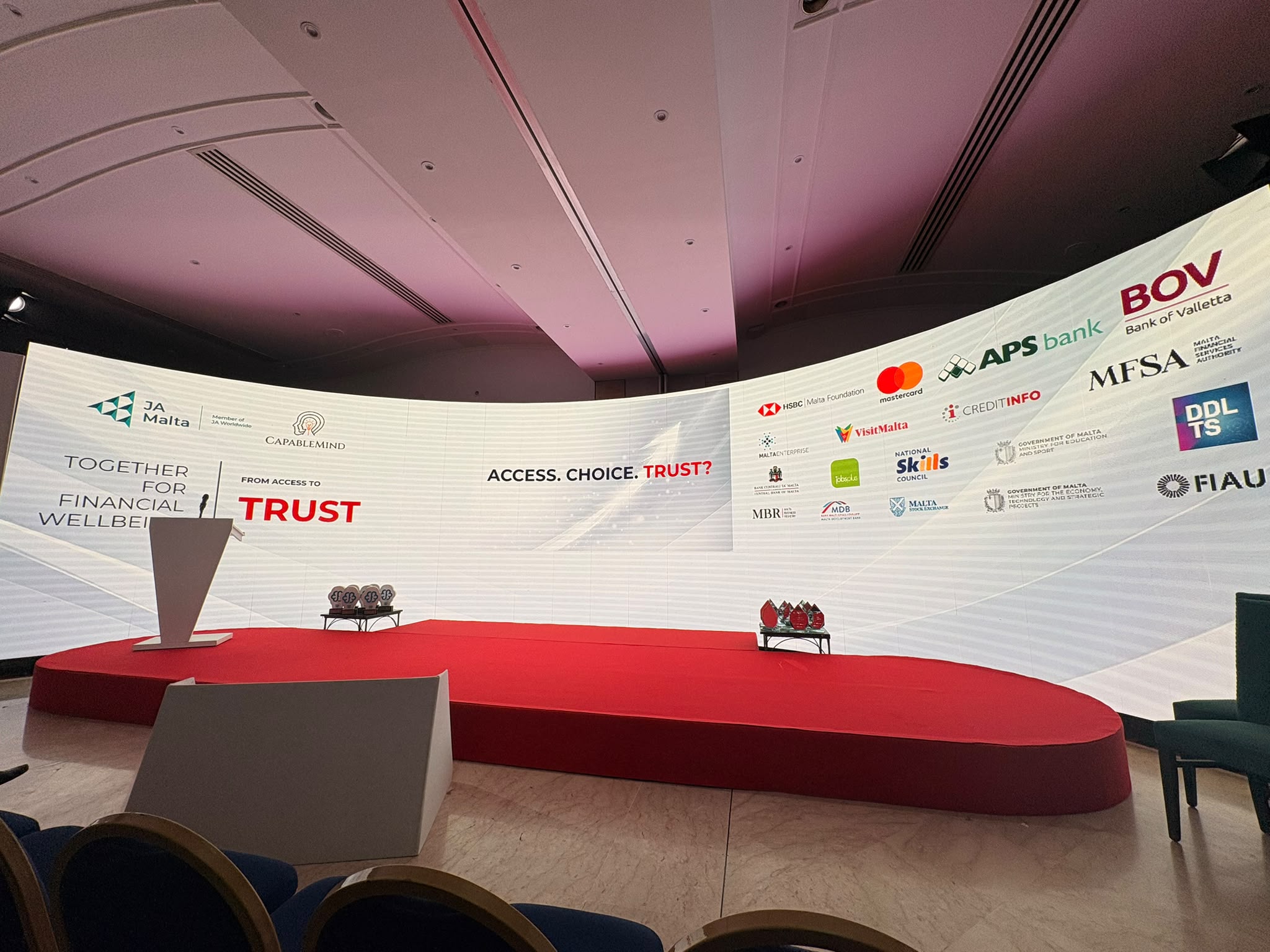
Financial knowledge alone is not enough to improve financial wellbeing, experts warn
Experts are discussing how financial education can be translated into better financial decisions

Tourism intensity climbs as Malta’s effective population tops 670,000 in August
During August 2025, St Julian’s tourism intensity reached 143 tourists per 100 residents

Millions in taxable income declared by 81 companies with no employees
Tax declared by US multinationals in Malta rose to €118 million in 2024, up from €24.7 million in 2020