


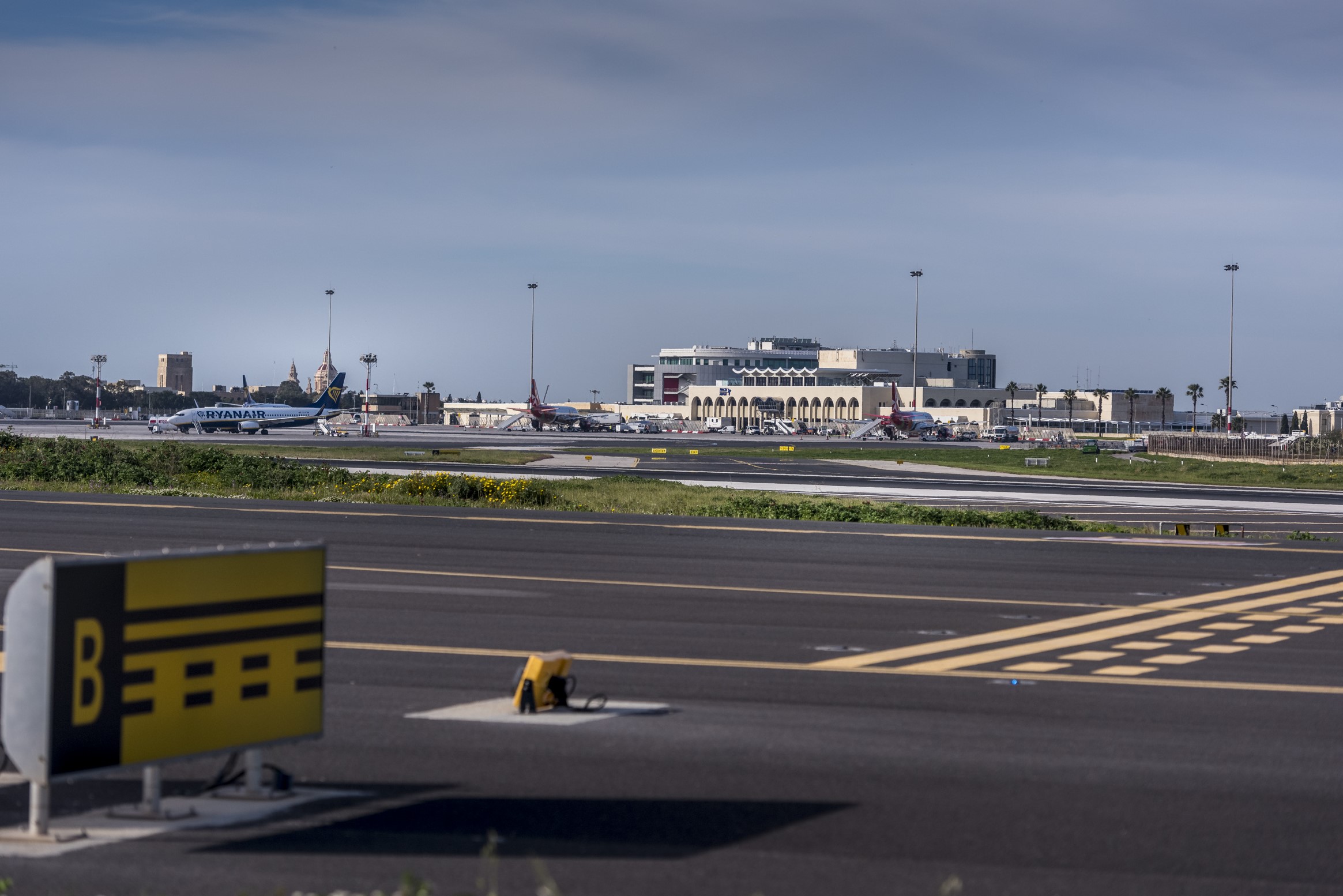
Malta International Airport (MIA) welcomed more than 8.3 million passengers between January and November this year, with the eight millionth passenger milestone being reached for the first time in the airport’s history on 12th November 2024.
Marking a 15 per cent increase over the same comparable period last year, the strong 11-month performance has already confirmed 2024 to be "the airport’s best performing year to date," wrote the airport in a statement.
In November, 630,637 passengers travelled through the airport, translating into a double-digit growth of 19.2 per cent over the same month in 2023.
Traffic peaked towards the beginning of the month, with 26,936 passenger movements being registered on Saturday 2nd November, the month’s busiest day. This growth in passenger numbers in November was experienced in parallel with an upturn of 19.8 per cent in aircraft movements and an increase of 18.3 per cent in seat capacity over the same month in 2023.
Seat load factor (SLF) also gained 0.7 percentage points over last year, to stand at 85.6 per cent. The top contributor to November’s traffic was Italy (+9.6 per cent over 2023) with a market share of 20 per cent, followed by the United Kingdom (+16.7 per cent).
The most significant growth within the airport’s top markets, however, was observed in the Polish market (+56.0 per cent).
Overtaking Germany and Spain, Poland secured the third spot on Malta International Airport’s market leaderboard, with this result having been achieved last in January 2024


Malta looks to China and Asia to diversify tourism markets
The partnership aims to promote Malta, diversify its tourism offering and boost sustainability

Strong demand for Malta Government Stocks as offers reach €617 million
The Government had initially authorised an issue of €300 million
Employers call for ‘decisive’ shift in public spending ahead of Budget 2027
The upcoming Budget 'must be judged' on its capacity to deliver long-term transformation, not just sustain short-term consumption