

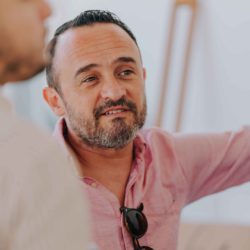
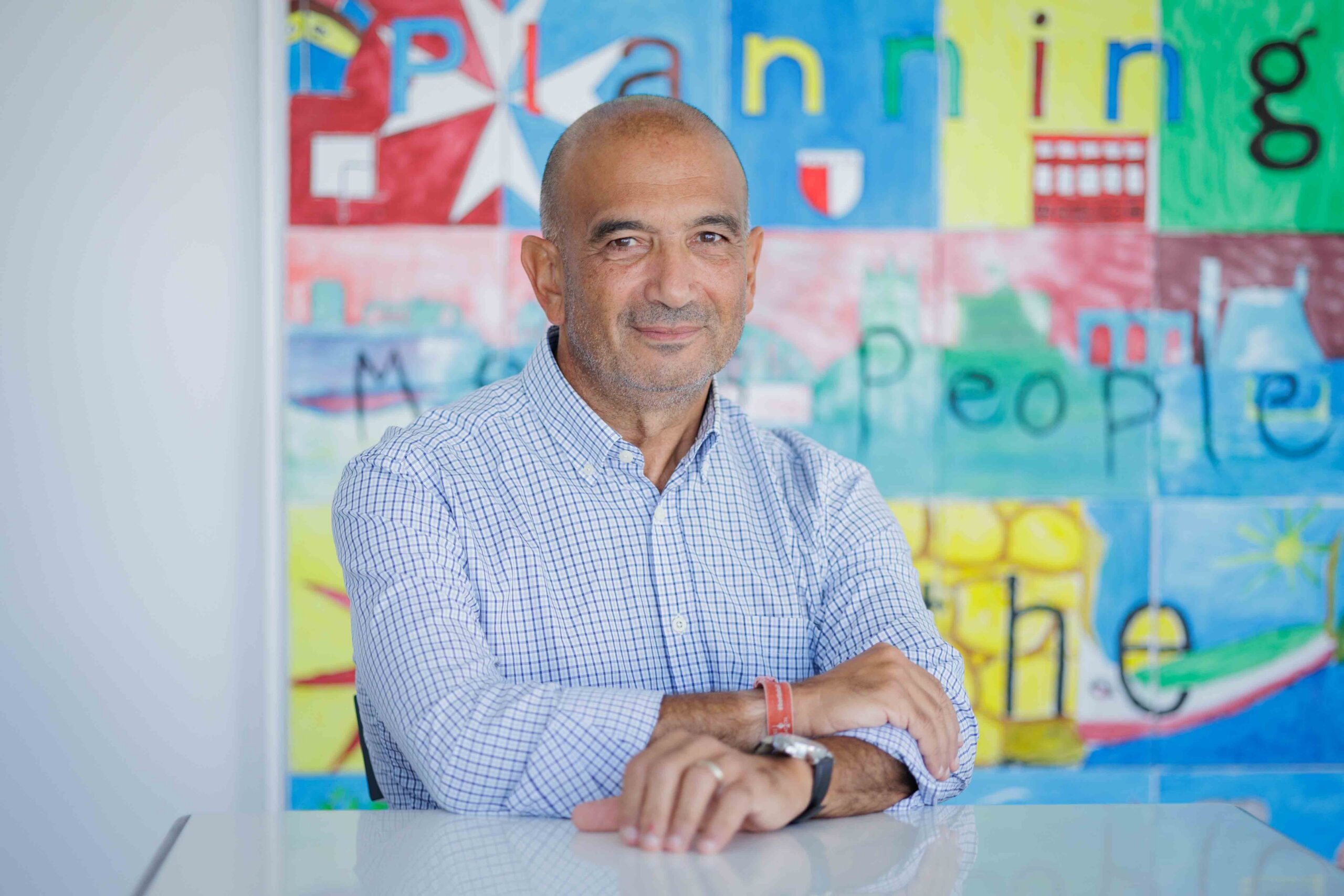
Joseph Gauci, Deputy Director of the ICT, Mapping and Digital Services Directorate at the Planning Authority, has 28 years’ experience at the Authority. A physics teacher by profession, he spent many years working on Plans and Policies before moving to the Mapping and Digital Services Directorate in 2018.
The way the country is mapped has changed beyond recognition since then. “Today, mapping is carried out by drones on a daily basis, and the work has become far more complex,” he explains. “We are now on the cusp of perhaps the most significant evolution in mapping: the shift from 2D to 3D. This will fundamentally change how we view and understand the space we live in.”
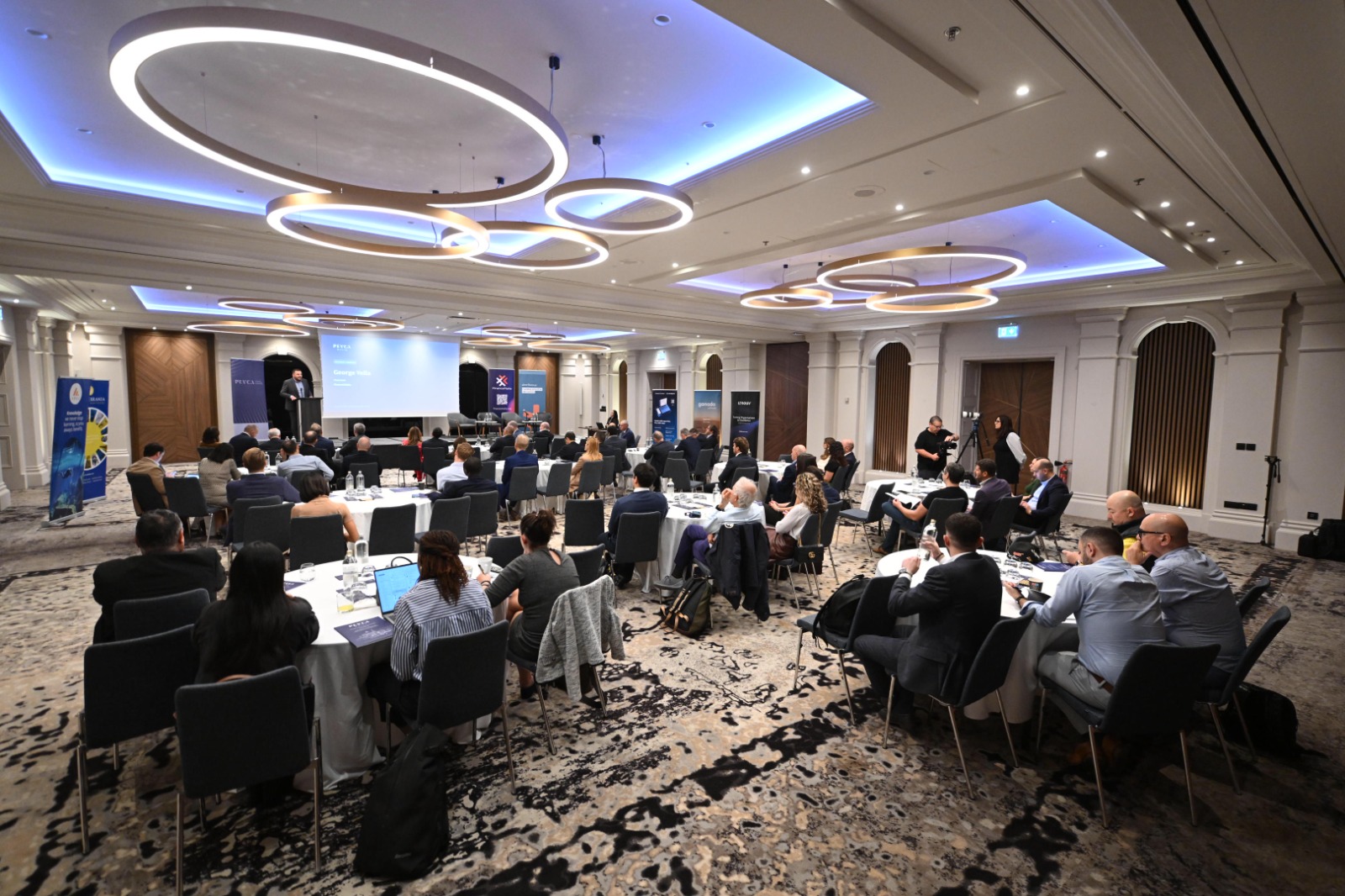
That transition will feature prominently at the upcoming Planning Conference "The Future by Design", which is being organised by the Planning Authority this Thursday 22nd October.
“It is always the right time to look at planning in Malta, because we tend to have a narrow way of looking at it,” Mr Gauci says. “What we see happening out there is the result of the country’s economic and social realities, yet we rarely examine the spatial impact of our policies, and it is time we started doing so through an integrated approach. We talk about homes and offices, but do we have the space for them? We have ways of identifying key projects, but do we have the infrastructure to support them? These things go together. The Strategic Plan for the Environment and Development in 2015 was a push towards that integrated approach, and digitalisation will now help us visualise what we want and what we need, while making it far easier to collaborate with other entities.”
Collaboration is the thread running through the event. “Even when projects make sense on their own, and even when they make sense spatially, we still have to ask how we are going to manage them and whether they are compatible with one another,” he says.
Last year’s conference focused on digitalisation in spatial planning, and this edition takes that conversation further. “Last year we showcased the work we had done on 3D mapping, and since then we have refined it considerably,” Mr Gauci explains. “Commercially available platforms give a very good general idea of a place, but they lack the level of detail needed for policy planning. This year we are presenting more advanced results in digitalisation and 3D mapping and showing how they can be put to work in shaping policy.”
The conference will also introduce an international perspective through Dr Wei Yang, a leading figure in global planning whose work spans sustainable development, regeneration and digital planning. “We can be quite insular locally, so a bigger perspective helps. Our society has changed a great deal since our basic idea of planning was introduced by the British, and our people have changed too. We are trying to push a comprehensive approach that also respects the local dimension of where communities want to go. Vision 2050 sets out where the country wants to be, and it is our job to look long term, but we still have to ask what that means in real terms and what we need to do to get there.”
Those questions carry particular weight in a small, densely populated island. “We have a relatively high population density, so we need to use land efficiently and effectively, and identify our needs for today and for tomorrow,” Mr Gauci notes. “Some 78% of development already takes place on land that has been developed before, which shows we are becoming more efficient in how we use it. But consider schools. Whilst most modern schools have been built in the Rural Area (ODZ) we should always question why. Is there a mismatch between sectoral policy and its spatial dimension? Do we need more schools, and what kind of schools will we need in the future? Could they have a dual use, serving as a school in the morning and community facilities, such as e.g. night centres, in the evening?”
Looking beyond Malta’s shores is equally important, he argues. “What happens abroad will affect us in the end, so we need to be aware of international trends and invest in the use of our space so that we can absorb those changes well. The future planning scenarios discussed at the conference are intended to inform the decisions being taken today. They allow us to look at the options we have, understand their impacts, work out how to achieve our objectives, and make sure we reduce any negative effects along the way.”
Balancing today’s needs with the Malta that will be handed to the next generation is a shared responsibility. “The Authority cannot do this on its own,” Mr Gauci warns. “Government needs to identify where it wants to go, and then we need to understand how best to achieve those objectives on the ground.”
The conference is aimed at planning practitioners, government officials and the Authority’s staff, with five workshops planned around specific topics and an invitation to open discussion. The findings will also inform the Authority’s work in the months ahead.
“In the coming months the Planning Authority will be working on the National Spatial Strategy, so it is important that what we gather is based on actual data from the grassroots. If we do things together, we can help shape a better Malta for future generations,” Mr Gauci concludes.
The Future by Design is taking place this Thursday 22nd October, at Hotel Excelsior in Floriana. Registrations are open on https://events.pa.org.mt/
PA CEO resigns as director of his consultancy firm
The PA CEO remains the sole shareholder of the consultancy firm, under his legal name 'John Buttigieg'
Maltese innovation leaders propose tax incentives for environmentally responsible commuters
The proposal was one of five proposed by stakeholders at a Sustainable Mobility Mixer
Insurance association calls for compulsory helmets on e-scooters
The Association had first proposed the use of compulsory helmets seven years ago