



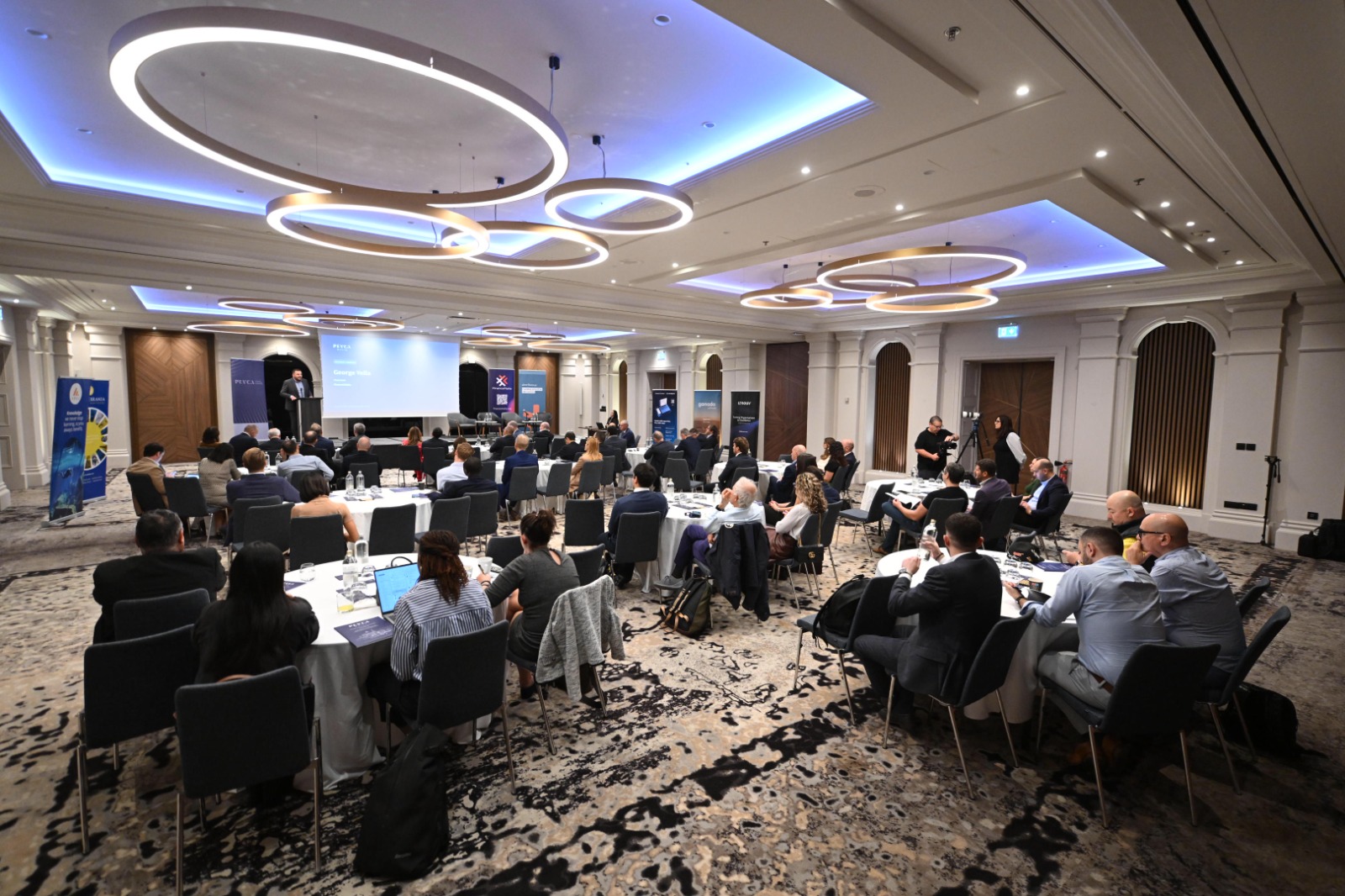
TCN’s inability to vote has made them an easy political target, Michael Piccinino, Shadow Minister for the Self-employed, Small Businesses and Co-operatives, said at the Business in Malta Conference 2026.
Interviewed by James Cummings, Business Editor at Times of Malta, Dr Piccinino gave a mixed assessment of current policy. He cited the recent Budget measures concerning third-country nationals as an example. Was the Government seeking to collect more tax or to control the population? Dr Piccinino said it should explain which outcome it intended to achieve so that the public could judge whether the measures worked.
Furthermore, he warned that these measures would impose additional costs on employers, who would ultimately have little choice but to pass them on to consumers through higher prices. As a result, it would be the public who would end up footing the bill.
He also acknowledged that some measures were moving in the right direction and said the Opposition’s role was to identify where they could be improved.
Dr Piccinino called for greater investment in Malta’s workforce, starting with courses tailored to the skills employers need today and informed by the roles they are likely to need tomorrow. He also raised the question of what happens to people already in work as those roles change. Businesses need access to schemes that help employees develop skills for their current jobs or retrain for different ones, he said. He also argued that while digitalisation has an important role to play in improving productivity, greater attention must also be given to equipping workers with the skills businesses need.
Turning to regulation, Dr Piccinino questioned how much was being done to reduce the time businesses spend on paperwork. He urged the Government to examine whether it could achieve the same objectives while asking less of those who have to comply. He also questioned how often businesses are consulted as part of the preliminary assessment of proposed legislation.
That work should begin early in the case of EU regulations, he added. By the time a measure reaches a Maltese company’s boardroom for implementation, its implications for the local business community should already have been assessed.
Dr Piccinino drew a parallel with an entrepreneur applying for a bank loan. A bank expects the applicant to present a business plan and explain what the investment will achieve. Businesses should be able to expect the same clarity from the Government when it introduces a measure that affects them, he argued.
Related

Malta Chamber calls for seasonal approach to revised tourism eco-contribution
It warns that a fixed contribution would have a greater impact during winter

Residential building approvals down 37.4% in third quarter of 2026
The number of new dwellings approved fell to 2,298, with Gozo recording a particularly sharp decline of 48%

73% of Malta’s businesses believe country is heading in the wrong direction, SME Barometer finds
The findings emerge from the latest SME Barometer for the third quarter of 2026