


As Malta looks beyond Europe to strengthen its position as a trusted international financial centre, regulatory diplomacy is becoming just as important as regulation itself.
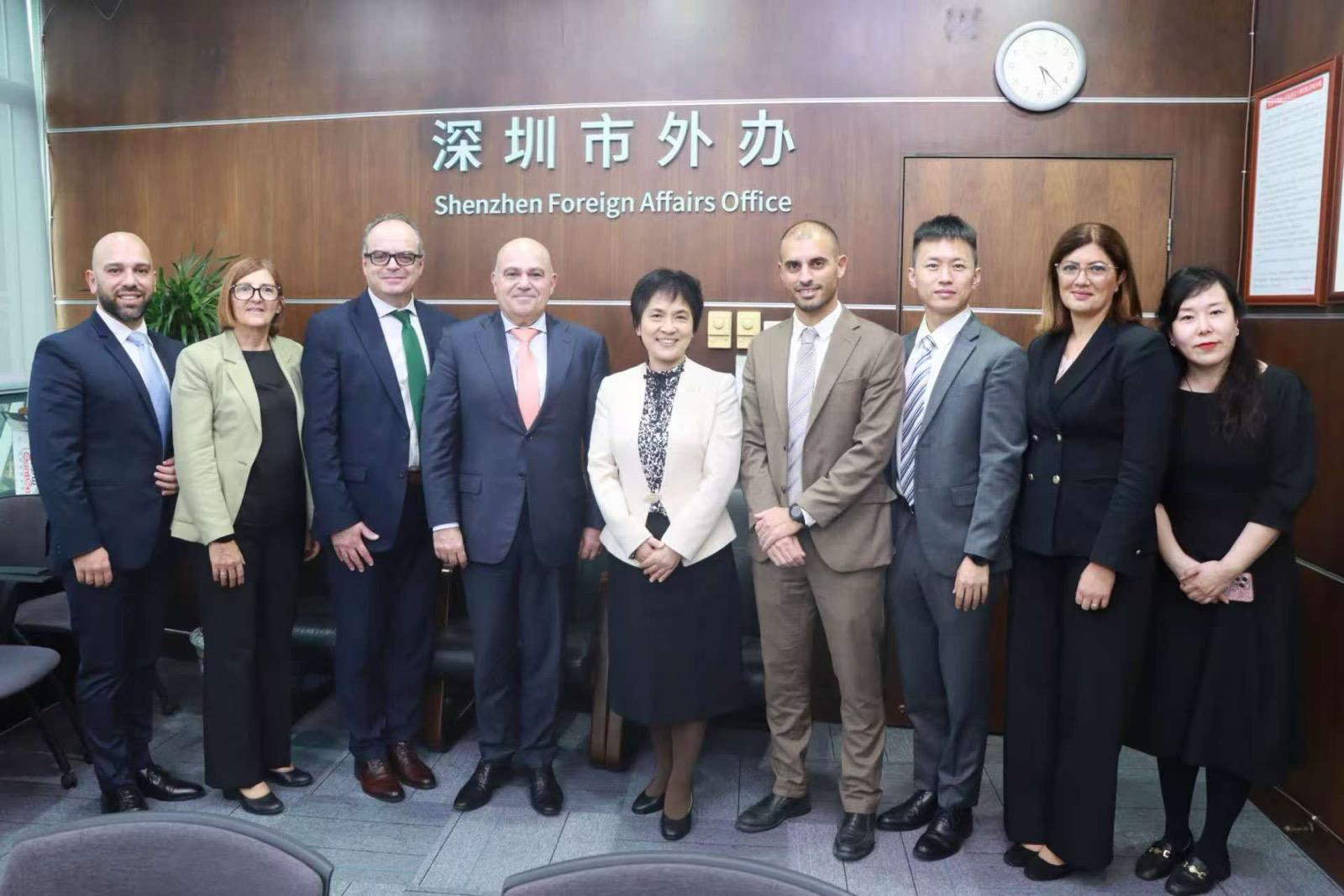
This was the thought behind a recent Malta Financial Services Authority (MFSA) delegation to Southern China and Hong Kong, where discussions focused on financial crime, supervision, innovation and long-term cooperation.
The delegation, which took place between 30th November and 4th December, was led by Matthew Scicluna, Head of Financial Crime Compliance at the MFSA, together with Ray Schembri, Head of Insurance and Pensions Supervision, and was joined by Doreen Balzan, Senior Technical Advisor (Financial Crime Compliance), Catherine Attard, Deputy Head (Office of Chief Officer Supervision), and Anthony Tomaselli Chetcuti, Senior Technical Expert (Insurance & Pensions Supervision).
The visit was supported by Malta’s Ambassador to China, H.E. John Busuttil, and formed part of a wider effort by Malta’s institutions to build strong, lasting relationships with key global partners.
During the visit, the delegates had the opportunity to meet with the local authorities and exchange views on the current international trends and supervisory best practices vis-à-vis the geographical differences and jurisdictional peculiarities. Additionally, whilst in Hong Kong, part of the delegation attended the Insurtech Asia, one of the largest conferences for the insurance sector in the area so as to gain a closer view on the specificities of the Asian market.
“The main objective was knowledge-sharing from a regulatory perspective, as well as building bridges with our counterparts,” Mr Scicluna tells BusinessNow.mt. “However, there is also a business dimension to this engagement. By building these relationships, we are setting the tone for deeper, mutual understanding of different markets, whilst identifying opportunities and assessing what could potentially be introduced to Malta in a sustainable and well-regulated manner.”
Why regulatory relationships matter
For Mr Scicluna, building relationships with overseas regulators is a practical necessity in today’s global financial system.
“From a supervisory perspective, it is not effective for a national regulator to operate in isolation,” he says. “Maintaining strong relationships with other regulators allows us to obtain information on specific persons or entities when required for supervisory purposes.”
Beyond day-to-day supervisory activities, these exchanges also support Malta to identify areas of strategic interest.
“They allow us to understand which sectors and activities are evolving internationally and where there may be longer-term opportunities for our country.”

The delegation’s meetings in Shenzhen included discussions with senior government and regulatory officials, including representatives from the Shenzhen Foreign Affairs Office. Discussions also touched on mobility and cooperation frameworks relevant to financial services engagement.
“The objective is to establish a solid foundation at the outset,” Mr Scicluna explains. “This involves formalising relationships, ensuring they are reciprocal in nature, and progressively advancing towards deeper and more structured institutional engagement over time.”
What this means for Malta-licensed firms
Asked whether these discussions could lead to stricter AML/CFT expectations for Malta-licensed firms with international exposure, Mr Scicluna is clear about the MFSA’s role.
“As a regulator, we can’t direct financial institutions to accept or refuse specific customers,” he says. “Authorised Entities must act within the legal framework they fall under, assess customer’s risks and onboard their business accordingly.”
Instead, the focus is on ensuring that firms have the right safeguards in place.
“Our job is to make sure institutions are applying appropriate mitigation measures. We can’t be in a situation where Malta is promoting international business, only for it to be blocked by regulatory uncertainty.”
Ultimately, the delegation reflects a broader national objective.
“There is one common goal,” Mr Scicluna concludes. “To build and maintain strong international relationships so that Malta continues to improve, from a regulatory perspective and from a business perspective.”
Showcasing Malta’s regulatory journey
An important part of the visit was also about telling Malta’s story.
“We wanted to showcase what Malta has achieved, from a supervisory, regulatory and strategic perspective,” Mr Scicluna says. “We spoke openly about the journey we’ve been through over the past years, particularly in financial crime compliance, and where we are headed.”
The delegation also met with technology and financial services companies to better understand how innovation is being applied in practice. Mr Scicluna was impressed by the pace at which China has managed to implement advanced technologies into everyday life.
“From a technological point of view, China is very advanced. They are already in the implementation stage, whether it’s artificial intelligence, self-driving cars, or fully digital consumer services like ordering food.”
At the same time, the exchanges reflected a spirit of mutual learning.
“They have a lot to learn from us from a regulatory perspective. European standards are seen as very high, and Malta is viewed as a good example of how regulation can be applied in a practical, accessible way.”
Financial crime, cooperation and trust
Financial crime prevention was a central theme throughout the visit, particularly in Hong Kong, where the delegation met with the Independent Commission Against Corruption and the Hong Kong Monetary Authority.
“These discussions are directly linked to our financial crime function,” Mr Scicluna says. “We talked about corporate fraud detection, investigative models and how regulators can work more closely with the private sector.”
He explains that public–private partnerships are becoming increasingly important.
“If you want to understand where the sector is really at, for example when it comes to fraud, you need open discussions with industry. That’s how you stay ahead of emerging risks.”
The delegation also explored areas such as RegTech, supervisory technology, and the growing link between climate risk and AML/CFT obligations.
“We spoke about our experience with the VFA framework, the transition to MiCA, and how we supervise crypto asset service providers,” Mr Scicluna notes. “There was strong alignment, and a clear interest in formalising cooperation through memoranda of understanding.”
Training, innovation and what comes next
One of the most tangible outcomes of the visit was the identification of future collaboration opportunities, particularly in training and capacity-building.
“Formalising these relationships through MoUs is crucial,” Mr Scicluna explains. “It allows us to exchange information, organise joint training and even create opportunities for our officers to work alongside their counterparts abroad.”
Several action points are already being considered, including technical workshops and a possible financial crime-focused conference in 2026.
“Once these connections are in place, opportunities in innovation, supervision, and training naturally follow,” he explains.
Malta’s engagement with Asian partners reinforces its role as a European gateway for trusted, well-regulated financial cooperation.
“Even though China is largely self-sustaining, Europe is still seen as very important because of its high standards,” Mr Scicluna explains. “Malta’s size actually works in our favour. We’re small, interconnected and accessible.”
By strengthening ties with key Asian financial centres, the MFSA is laying the groundwork for future cooperation that supports innovation, safeguards financial integrity and reinforces Malta’s role in the global financial ecosystem.


Housing Authority doubles vacant dwelling restoration grant to €50,000
Eligibility criteria also widened to include properties built 20 years ago

Workplace accidents remain high in Malta despite slight decline – construction still tops risk list
High-risk sectors continue to dominate injury statistics
Five and four star hotel occupancy edges up in 2025, MHRA survey finds
Five-star occupancy levels stood at 71 per cent in 2025, up slightly from 2024 levels