

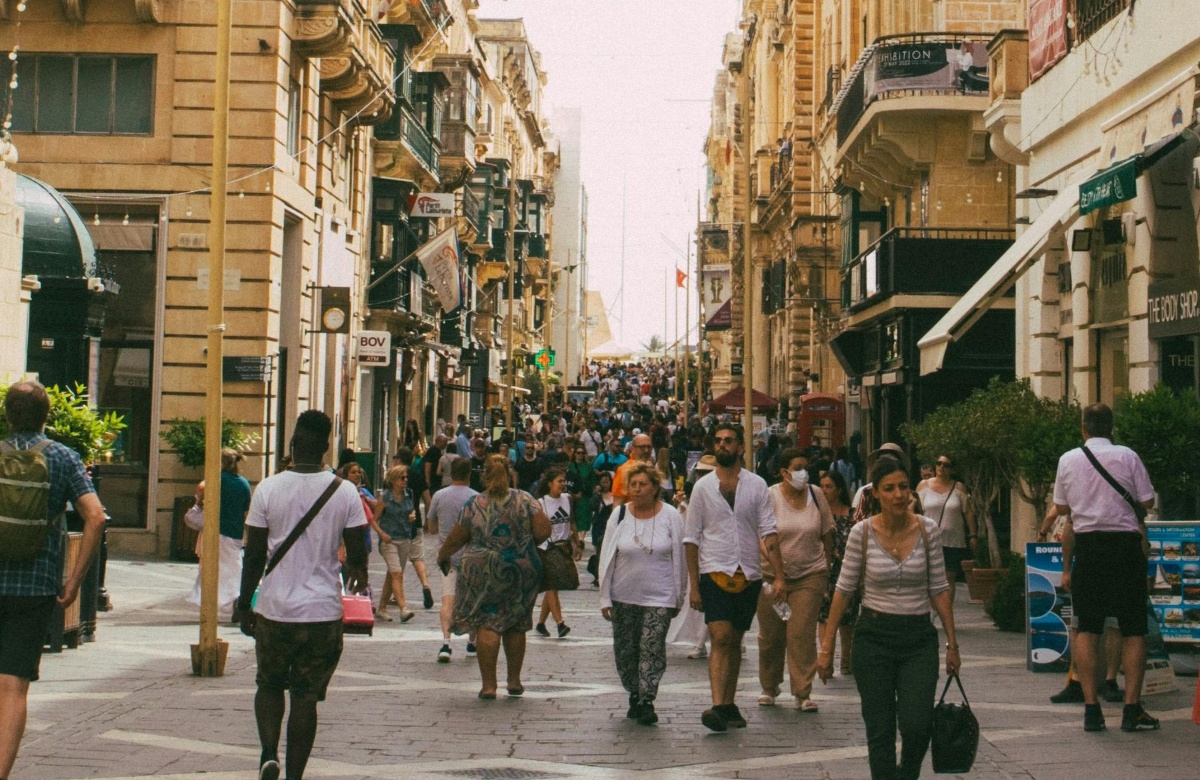
The transformation of the Maltese economy over the last decade is an undeniable success story. With GDP surging from €7 billion to over €24 billion, Malta has become a high-activity hub. While our national economy is supported by a diverse array of sectors, the tourism, hospitality, and leisure industries remain vital pillars.
This growth has been underpinned by two powerful engines: High consumer confidence and a robust, unwavering business confidence. As we look toward the benchmarks set by Vision 2030 and Vision 2050, our international visibility has never been stronger.
Malta has successfully evolved into a year-round hub with a balanced business ecosystem, moving beyond the traditional “summer destination” trap. We now see a healthy mix of business models: Those that peak in summer but maintain year-round flow; those with steady month-to-month performance; and specialized models – often supported by the thriving Expo and Exhibition industry – that are actually healthier in the winter.
Refining the mix: Quality and energy
As we refine this mix, we are naturally seeing a transition in our visitor profile. This is not about eliminating the youth market. On the contrary, Malta remains a vibrant destination for young travelers too seeking our high-caliber clubbing scene, concerts, and major festivals. However, we are becoming more selective. The focus is now on refining our offering to reach our warranted quality standards. This means moving away from certain “unwarranted” niche youth segments and replacing them with a demographic that appreciates the island’s energy while contributing to its sustainable growth.
Visionary leadership vs. the copycat risk
In this climate of rapid expansion, the market is splitting into two distinct paths. On one hand, we have a significant group of visionary investors who are acting with great diligence. These operators are highly aware of international trends; they are investing in high-quality products and unique concepts that move Malta up the value chain. Their success is rooted in operational intelligence and is the primary driver behind the encouraging increase we are seeing in spend-per-capita.
On the other hand, there is a distressing amount of investment in copycat concepts. Replicating existing ideas in an already crowded space is a significant risk – not just to the investor, but to the industry at large. We must be careful that this “copycat syndrome” does not dilute or damage the efforts of our visionary investors who have worked hard to elevate our national product. In an era of “Real Competition,” an unbridled oversupply of redundant concepts risks a price war that could erode margins for everyone, threatening the very standards that attract high-spending visitors.
The pipeline challenge: Carrying capacity
The challenge we face is not a lack of demand, but the volume of supply currently in development. When we look at the vast number of new projects coming online and the steady stream of applications being processed, it is clear that a massive pipeline of expansion is upon us. This reflects a healthy appetite for investment, but it also confirms that we must respect our island’s carrying capacity.
For the Maltese economy to remain healthy, we must transition from a mindset of “more” to a mindset of “better.”
By following the lead of our most diligent, visionary investors and acknowledging the reality of the projects in the pipeline, we ensure that our success is not just a peak, but a stable plateau for a high-quality, sustainable destination.


Devising an Equity Market Development Programme
The equity market suffers from chronically thin trading volumes especially in the aftermath of the pandemic
Funding national projects
How can capital markets be used to diversify the funding sources of long-term national development projects
Malta’s earnings season
The importance of enhanced transparency, shareholder developments at HSBC Bank Malta, and broader capital market reforms