

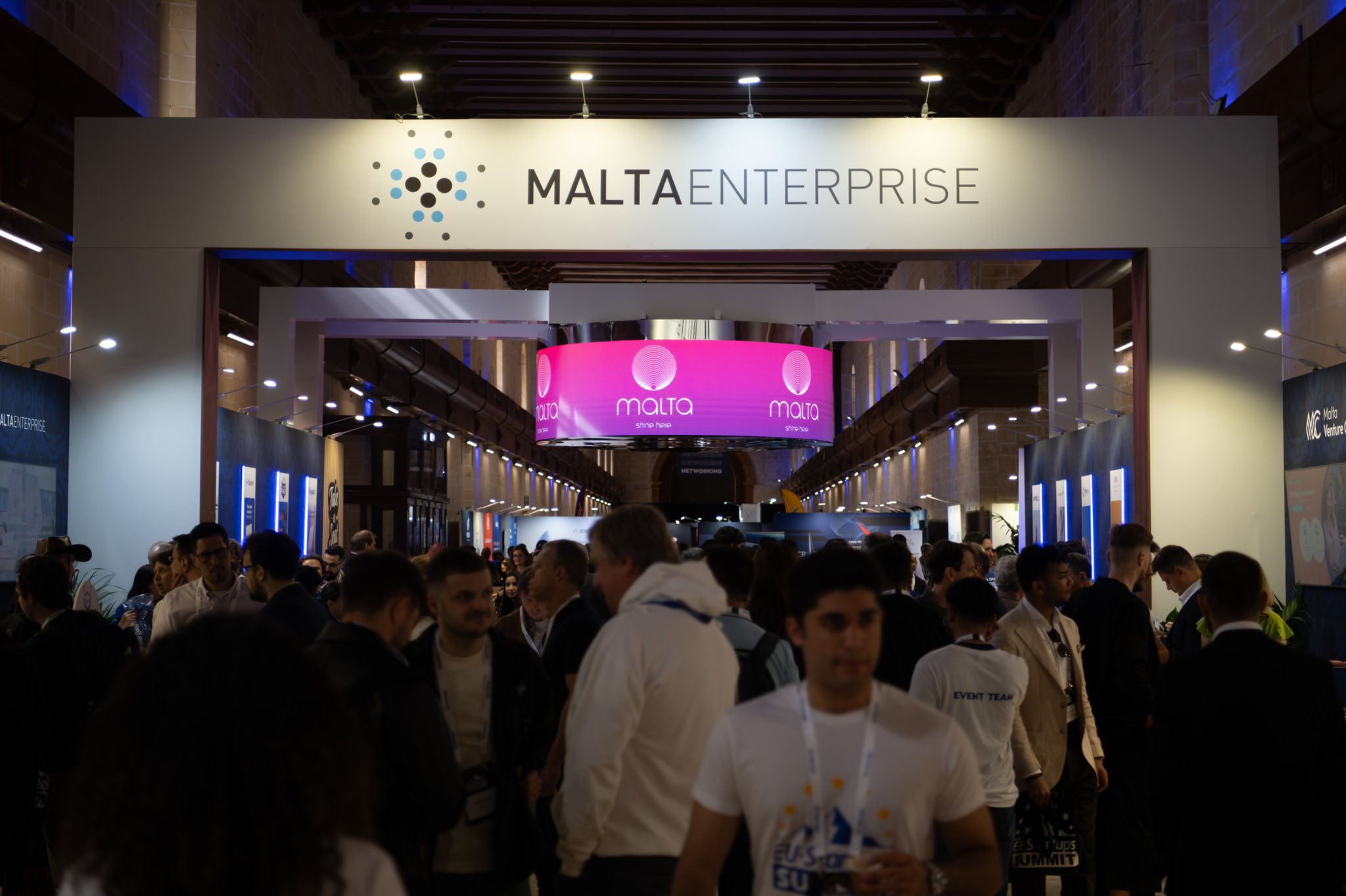
Perhaps it is because I deal with startup on a daily basis but the EU-Startups Summit always feels like an important event for Malta, not simply because of the scale of the conference, but because of what it brings into the local ecosystem for a few days each year.
For Maltese founders, and perhaps even more for people still on the fence about starting something, it brings what they are aiming for in much sharper focus. If you put in the effort to go around, you get direct exposure to people who are already building companies, raising capital, and dealing with the actual grind of scaling a business. In a small ecosystem that does not have many such examples to hold up, that matters. Sometimes hearing someone talk openly about what went wrong, or how long things actually took, is more useful than months of reading startup content online.
The investor presence was notable too. A large number of investors attended across the two days, and that alone says something. Venture capital firms do not generally travel unless they think there is a reasonable chance of finding interesting companies or people. Their showing up suggests the Summit is at least registering on the radar of people who allocate capital for a living.
That said, there is probably room to get more out of that presence for the local ecosystem. The conference draws international founders naturally, but it could do more to put visiting investors, or prospective local investors, in the same room as Maltese entrepreneurs in ways that actually go somewhere. The instinct here might be to hold a formal pitching sessions: I think that would be a mistake as it would put pressure to find enough startups to include, some of which might not be ready. I'd go for smaller formats might work better: perhaps even something like a dinner where investors can mingle with people in the local ecosystem. Simply placing them in the same room should lead to interesting conversations.
Thanks to Thomas Ohr, founder of EU Startups, I had the chance to present on the reverse VC session, where investors pitch themselves to founders rather than the other way around. It was genuinely entertaining, and probably one of the better formats across the whole two days. It reverses roles completely. Founders get to see how investors think, what they care about, how different funds actually position themselves. There is also a kind of honesty in it that traditional panels tend to iron out.
The startup pitch competition was equally well attended and the quality was generally strong. Even so, there was a noticeable gap between some of the companies. A few were still figuring out whether they had a real idea; others were already generating revenue and had clearly been at it for a while. That made the competition feel a little uneven at moments, even if the energy in the room held up.
I did not get to every session, but the ones I attended were worth the time. One stood out more than the others: When Execution Is Worthless, Vision Is Everything: How to Start a Business in the Age of Infinite AI by Joaquin Cuenca Abela.
What made it impactful, for me, was not the AI angle itself, but the candour. Cuenca talked about how rapidly advancing LLMs kept forcing his company to rethink what they were building. Every time the technology moved, they had to pivot again and figure out where they could still create value alongside increasingly capable models. Eventually they found a space that worked with the technology rather than against it.
That kind of impact is hard to replicate in a blog post or a podcast. It is adaptation described in real time, by someone who lived it. It lays bare how difficult it is to build a successful startup and that, even when you think you're on the right path, something might happen in the market that threatens your whole business model. Surviving often has less to do with having the right idea at the start and more to do with noticing when the world has shifted under your feet.
If that had been the only session I caught across the two days, it probably still would have been worth showing up.
Perhaps that is ultimately the value of events like this, rather than the hype or networking clichés that tend to surround startup conferences; the simple act of compressing experience into a few days and making it accessible to people who might otherwise never encounter it.
For Malta, that matters more than it might for larger ecosystems. We do not have an endless flow of founders, operators and investors passing through every week. Bringing those people here, exposing local entrepreneurs to them, and creating the conditions for conversations to happen is important in itself.
The Summit cannot create a startup ecosystem on its own. But it can help make one feel more real.
Featured Image:
The EU-Startups Summit 2026 / Malta Enterprise via Facebook

Malta’s bond market in Q4
The next few months could prove to be an eventful period for the bond market

Heading into the fourth quarter
The fourth quarter of the year commences next week
Work smarter, not larger: upgrading Malta’s economy
By aligning business incentives and public governance with technological adoption, we replace behind-the-scenes headcount with tech-driven efficiency