


The World Inequality Report 2026 delivers one of the starkest portraits yet of how deeply concentrated global wealth has become. Fewer than 60,000 ultra-rich individuals – the top 0.001 per cent – now own three times more wealth than the bottom half of the planet, or roughly 4 billion people. At the same time, middle and low-income regions face stagnating incomes, mounting climate burdens, and widening gender gaps. The report argues that inequality is not an accident of markets but a result of political choices – and that governments have the tools to reverse it.
A world of extremes: key findings from the report
The World Inequality Report 2026 (WIR 2026) marks the third edition in this flagship series, following the 2018 and 2022 editions. These reports draw from the work of over 200 scholars from all over the world, affiliated with the World Inequality Lab and contributing to the largest database on the historical evolution of global inequality.
This report shows that the top 10 per cent of the global population owns 75 per cent of all personal wealth, while the poorest half owns just 2 per cent. Income inequality follows a similar pattern: the richest 10 per cent capture 53 per cent of global income, leaving less than 10 per cent for the bottom half. Wealth is becoming more concentrated at accelerating speed; billionaire wealth has grown at nearly 8 per cent per year, almost twice the rate of the global economy.
But the report widens the lens beyond money. It shows that inequality by design cuts across climate responsibility, gender, geography, and political representation – creating a system where the wealthy pollute more, work less, pay proportionally less tax, and hold disproportionate political influence.
This doesn’t just affect the common Joe, but also affects the wealthy and business class.
With less money in the hands of consumers, demand weakens, markets shrink, and businesses face slower growth. The report makes it clear that extreme concentration of wealth isn’t only a social issue but an economic drag. When purchasing power is locked at the top, investment becomes more speculative and less productive, while small and medium enterprises struggle to expand in a stagnating consumer landscape. Even large companies eventually feel the strain as inequality erodes the very base that sustains economic dynamism. In short, inequality leaves the poor worse off and destabilises the entire economic ecosystem.
Europe is stagnating, Asia is rising
The global map of prosperity is shifting – but unevenly. Europe remains one of the least unequal regions due to relatively strong tax and transfer systems, but its overall income growth has slowed significantly. Meanwhile, countries in East Asia and South & Southeast Asia have experienced substantial increases in both income and wealth over recent decades, driving global convergence.
However, this rise masks deep internal inequality. In South & Southeast Asia, for instance, the top 10 per cent still capture more than half of all national income, while public investment per child remains far below global averages.
Sub-Saharan Africa faces the harshest combination: the world’s lowest average incomes and highest internal inequality, with average monthly income at only €220 PPP per school-age child in public education spending compared with €9,025 in North America & Oceania.
The gender gap is wider than we thought
Gender inequality looks far more severe once unpaid labour is counted. Globally, women work more hours than men – 53 hours per week compared to men’s 43 – when domestic labour is included. But because this work is unpaid and undervalued, women capture only 28 per cent of global labour income.
The report finds that:
- Women earn 61 per cent of men’s hourly income for paid work alone.
- When unpaid care labour is included, women effectively earn just 32 per cent of men’s hourly income.
- Female labour income shares are lowest in the Middle East & North Africa (16 per cent) and highest in Europe and North America (around 40 per cent).
This reveals a structural inefficiency: half the world’s labour force is systematically underpaid and overworked, slowing both productivity and social mobility.
Climate change: a problem of capital, not consumption
One of the report’s most explosive findings is that climate inequality is primarily driven by capital ownership, not just consumer behaviour.
The world’s richest 10 per cent account for 77 per cent of emissions linked to private capital ownership, compared with only 3 per cent for the bottom half. Even in terms of consumption, the top 10 per cent are responsible for nearly half of global emissions.
Climate vulnerability follows the reverse pattern: the people who emit least suffer most. The poorest 50 per cent bear roughly 75 per cent of global climate-driven income losses.
The report concludes that climate change is fundamentally a wealth problem – driven by investment portfolios, asset ownership, and corporate emissions controlled by the rich – not simply a lifestyle problem.
The case of Malta
In Malta, the wealth gap is particularly pronounced. According to the latest data from the Central Bank of Malta, the richest 10 per cent own practically 90 per cent of Malta’s business wealth (equivalent to €11.6 billion). On the other hand, the overall amount of debt (including mortgages and other personal credit) of households in the bottom half of the net wealth distribution is estimated at €6.7 billion (fourth quarter of 2023), accounting for 65.6 per cent of total household debt in Malta.
The wealthiest 10 per cent alone, account for half of the level increase in net wealth since 2010. The bottom half of households have experienced a relative decline in net wealth and a significant increase in debt. The share of net wealth held by households in the lower half of the distribution is a mere 12 per cent according to the central bank data.
Recently, Opposition leader Alex Borg floated the idea of a baby trust fund as a way of battling huge wealth gaps.
Wealth taxation and redistribution: the report’s proposed solutions
The report is unequivocal: inequality is a political choice – and so is reversing it.
Key recommendations include:
1. Progressive wealth taxation
A coordinated global minimum tax on multi-millionaires and billionaires could raise 0.45 per cent to 1.11 per cent of global GDP, enough to fund universal education, green investment, or global healthcare guarantees.
2. Stronger social transfers
Regions that implemented robust tax-and-transfer systems (Europe, parts of Latin America) saw inequality fall significantly. The report urges expansion of cash transfers, pensions, unemployment benefits, and childcare support as proven methods of reducing inequlity.
3. Investment in human capital
The education spending gap – €220 per child in Sub-Saharan Africa vs €9,025 in North America – is described as “a geography of opportunity” that reproduces global inequality. The report calls for massive public investment in education, health, and childcare.
4. Correcting global financial imbalances
Developing countries face significantly higher borrowing costs than developed ones, sometimes paying rates of 5 to 8 per cent compared to 1 per cent for many developed countries, even after accounting for risk. In 2023, developing economies’ total external debt servicing reached a record $1.4 trillion, with some countries spending more on interest payments than on health or education.
Each year, poorer nations transfer about 1 per cent of global GDP to richer nations through debt service and unequal financial returns. Reforming the system – from reserve currency dominance to credit rating norms – is essential to restoring fiscal space for developing regions.
5. Climate policy shaped around inequality
Emissions taxes targeting the super-rich, climate wealth taxes, and public investment in green infrastructure are necessary to ensure the wealthy bear their fair share of climate responsibility. Even modest rates of a global minimum tax on billionaires and centi-millionaires could raise between 0.45 oer cent and 1.11 per cent of global GDP and could finance transformative investments in education, healthcare, and climate adaptation.
The World Inequality Report 2026 delivers a blunt message: the world is at a crossroads. Inequality is rising because policy allows it to rise. But the tools to fix it – wealth taxes, progressive redistribution, investment in human capabilities, and climate accountability – already exist. The question now is not economic but political:
Will governments choose shared prosperity over extreme concentration?
Read the whole report here.
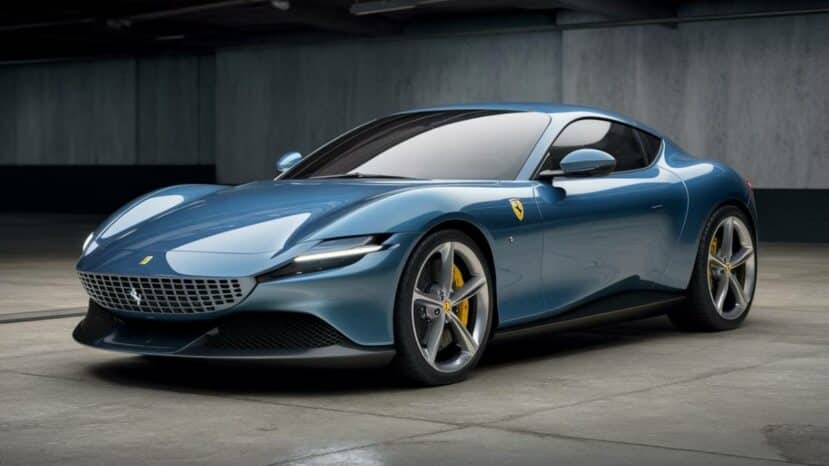
Ferrari unveils ‘Luce’: Its first fully electric supercar set for 2028
Pricing is anticipated to sit well above €500,000
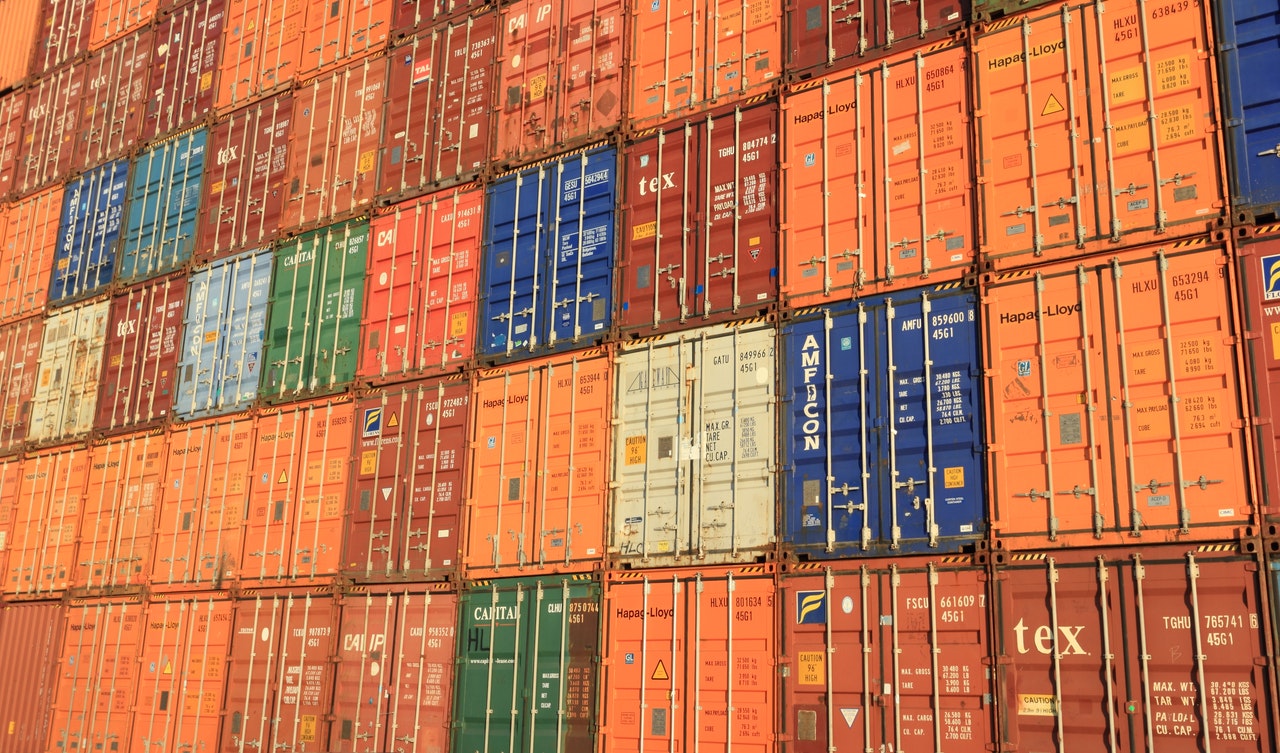
Malta’s trade deficit narrows as import shifts and export rebalancing continue in 2026
Over the full year, Malta’s trade deficit narrowed by €444.1 million compared with 2024
Thinking of housing as part of an urban system: what Malta can learn from Singapore’s public housing
Five lessons we can take from the nation twice the size of Malta