


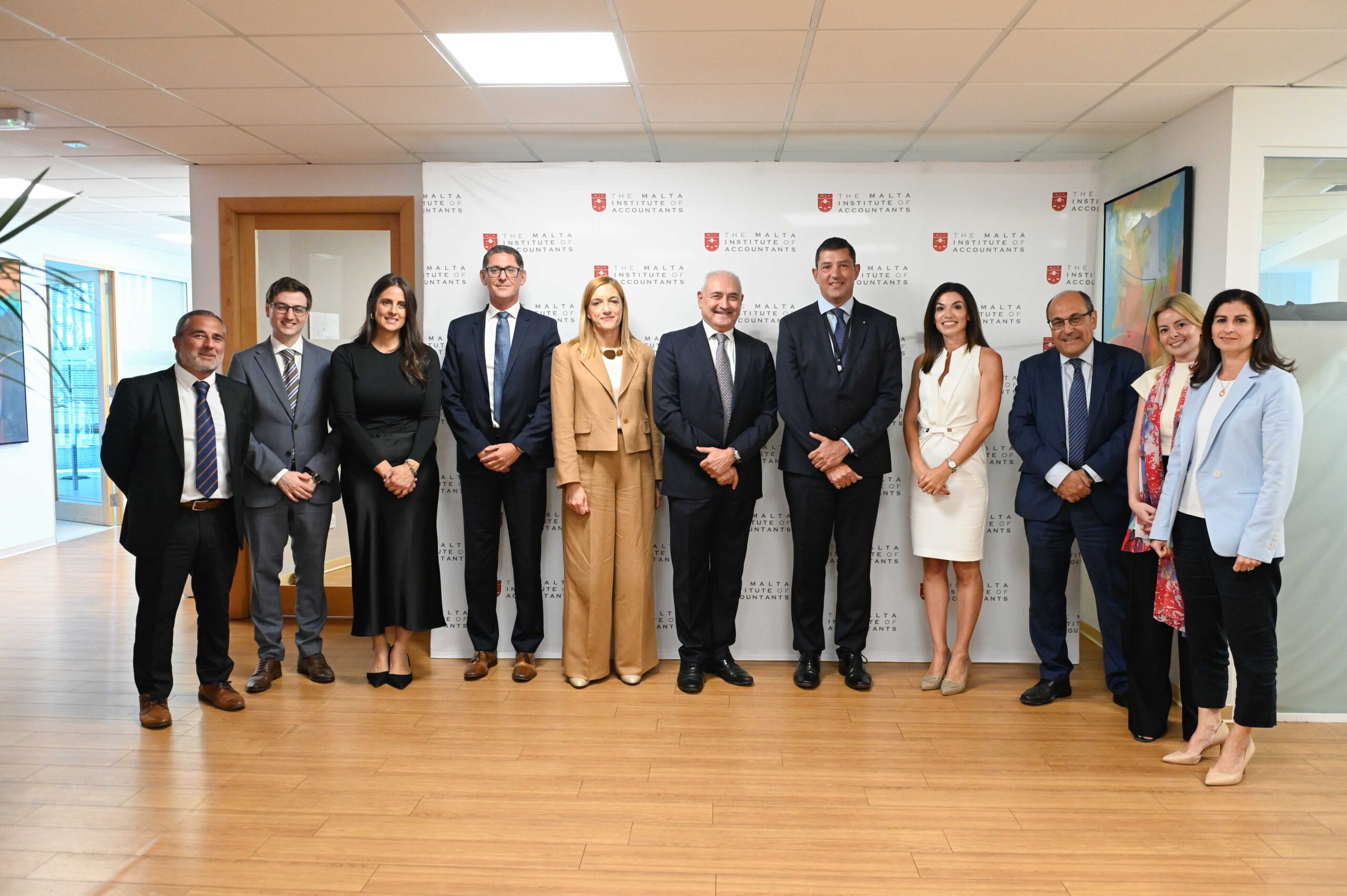
Representatives of the Malta Institute of Accountants (MIA), the Malta Institute of Taxation (MIT) and the Institute of Financial Services Practitioners (IFSP) submitted their joint pre-Budget proposals for 2026 to Prime Minister Robert Abela, Minister for Finance Clyde Caruana, Opposition Leader Alex Borg, the Shadow Minister for Finance Graham Bencini and Shadow Minister for the Economy and Enterprise Jerome Caruana Cilia.
A statement from the Institutes says that the representatives highlighted the key issues of competitiveness, skilled talent and productivity in their submissions, while insisting that meaningful consultation with stakeholders must take place before introducing major policy or regulatory changes. They cautioned against measures that risk “shocking the system,” while advocating for carefully planned transitions that give businesses and professionals time to adapt.
The representatives reiterated that enhancing productivity across all sectors should be a national priority, supported by policies that reduce bureaucracy, simplify processes and modernise government systems through the appropriate use of technology and Artificial Intelligence.
On the issue of labour market shortages, the Institutes emphasised that shortages in skilled talent are one of Malta’s most pressing economic challenges. They called on authorities to identify further measures which support upskilling and reskilling, incentivise internships and apprenticeships, attract Maltese professionals working abroad back to the country, and make Malta a more attractive location for skilled international talent through competitive policies and streamlined procedures.
In their budget proposals, the three bodies jointly presented various recommendations aimed at enhancing efficiency, fairness and the competitiveness of the Maltese economy. These included an appeal for the urgent overhaul of Malta’s tax penalty system to ensure it is fair, equitable and compliance-driven, in line with European Union legislation and standards of practice. They also called for updates to the fringe benefit rules to reflect modern workplace realities, such as wellbeing measures, work-from-home arrangements, green mobility and stock option schemes.
The Institutes also recommended the introduction of targeted fiscal measures to advance Malta’s Environmental, Social and Governance agenda, particularly through incentives for green projects, mental health support and waste reduction initiatives.

Budget 2027: Voters across political divide agree on most and least welcomed measures
New survey findings show sharp political differences in overall satisfaction with Budget 2027

BOV SmartPay: Payment solutions built around the merchant
One year after its launch, we see how BOV SmartPay brought the bank’s payment solutions together under one brand

A ‘growing shortage of qualified professional heavy goods drivers’ – ATTO calls for national strategy
'This is an issue that can no longer be overlooked'