



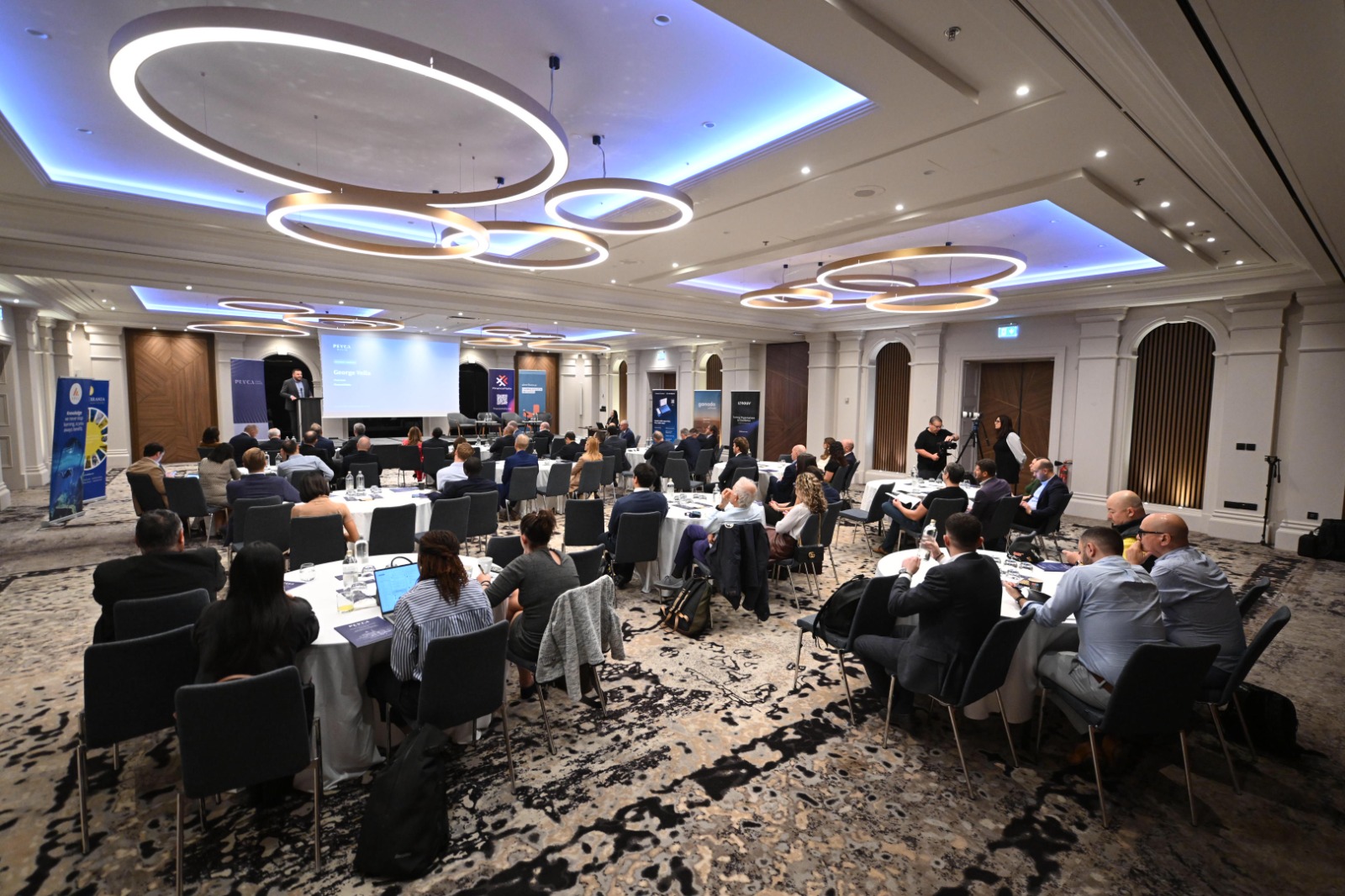
On April 17th, the Malta Chamber of Commerce, Enterprise and Industry will be hosting IBM & Tech Trends in Maltese Businesses. The event will feature the participation of top IBM representatives, focusing on the different ways AI, data, and modern infrastructure can deliver a tangible impact on Maltese businesses.
Bringing together senior business and technology leaders with the aim of exploring how innovation is transforming organisations across Malta, the event brings forth a unique opportunity to learn from international technology leaders visiting Malta, gaining fresh perspectives and insights while exchanging ideas on how to accelerate digital transformation and create new business value.
Menicos Mavrommatis, IBM’s technology sales and business development leader across Cyprus and Malta, is one of the speakers who will be sharing insights with participants. He describes how Malta is currently showing its strongest progress in the exploration and early adoption phase of AI, particularly through the uptake of GenAI solutions across industries.
“Many organisations are actively experimenting with AI to drive efficiencies and enhance customer experience, which is an important first step. However, the real opportunity lies in recognising the importance of data and governance as foundational enablers, and this is where Malta is beginning to build momentum,” he says.
Businesses are already starting to understand that leveraging their own structured, high-quality data is key to unlocking meaningful AI outcomes, while acknowledging the need for robust governance frameworks.
“Governance is essential to ensure compliance with the EU AI Act, mitigate bias, and maintain trust. Given Malta’s size and agility, there is a clear advantage in accelerating these areas, positioning the country to move from experimentation to delivering tangible, scalable business value through AI,” Mr Mavrommatis elaborates.
The event will see him focusing directly on how AI, data, and modern infrastructure can address the immediate transformation challenges that Maltese organisations are facing. The sessions will look at how AI can drive growth, where it can be applied to real business problems, and how strong data governance and secure hybrid environments enable that impact to scale. Business leaders will be able to hear directly from subject matter experts to learn about latest developments and shifts in the digital economy.
“The objective is to demonstrate how the right application of technology strengthens competitiveness and keeps organisations ahead of the curve. The programme addresses leaders who recognise that competitiveness now depends on how effectively technology is applied to the core of the business,” he says, adding that with
productivity demands constantly on the rise, staying ahead of the curve necessitates an effective strategy when it comes to applying technology directly to the processes that truly move the business.
“You need technology to work on those areas where speed, accuracy, and better decisions create a competitive edge. This is where the impact AI becomes tangible in the way organisations run their operations and engage with customers.”
What Mr Mavrommatis is seeing now corresponds to this vision, with entire workflows being automated, reducing friction and freeing talent to focus on higher‑value work. Insights no longer take weeks to appear; they’re accessible in real time, meaning they can be effective in reshaping decision cycles. Likewise, customer‑facing processes are being supported by governed, transparent AI systems that enhance service without compromising compliance.
“These shifts signal that AI is moving firmly into the operational core. We’re seeing organisation use AI in the back-office to streamline finance, HR, and procurement tasks, reducing manual workload and errors. Generative tools are supporting development teams in accelerating code creation, testing, and documentation. We expect the next wave to centre around digital labour, where intelligent systems take on complete processes and remove bottlenecks that slow the organisation down,” he explains.
For those attending the upcoming event, there is one big misconception he would like to challenge when it comes to AI and digital transformation in business. This is the belief that adopting AI alone will transform an organisation. Real impact, he insists, only emerges when AI is grounded in trusted data and supported by secure, modern infrastructure.
“Another misconception is that AI diminishes the role of people; in practice. In reality it elevates human expertise by removing repetitive tasks and improving insight. When organisations understand this, AI becomes a catalyst for growth rather than a source of uncertainty.”
He has one piece of advice to offer companies that are excited by AI but are struggling to move beyond experimentation.AI should be approached as a business transformation from the very start, rather than as a technology exercise.
“The most successful cases begin with a very clear question: which specific process will benefit, and what measurable value should be expected? For those finding it difficult, the most effective approach is to narrow the focus and pick one high-impact workflow in areas like HR transactions, customer operations, or software development, where productivity gains are immediate, and already well documented.”
Before attending the IBM & Tech Trends in Maltese Businesses event, Mr Mavrommatis would like each participant to ask themselves one practical question. Which part of their business would be fundamentally stronger if decisions were faster, processes were more automated, and data was fully trusted?
“Framing the decision this way ensures that AI is applied where it can deliver measurable gains. This can be in productivity, customer experience, or decision making. It also encourages leaders to consider the foundations needed to support that impact: high-quality data, secure hybrid infrastructure, and clear governance. When those elements align around a strategic priority, AI becomes a driver of long-term value, rather than another experiment,” he concludes.
The Malta Chamber is hosting IBM & Tech Trends in Maltese Businesses on April 17th, between 9:00AM and 1.30PM at The Malta Chamber in Valletta. Registration is available here.
Identità aims to shorten waiting times and simplify procedures as part of its vision for coming years
Improvements must be achieved without compromising identity security or personal data protection, it said

Malta now has more €1,500,000+ homes for sale than ones under €250,000
A full quarter of the homes available for no more than €250,000 are in Gozo

Perit proposes underground transport network to tackle traffic, flooding and lack of open spaces
He calls the project 'A Second Malta'