


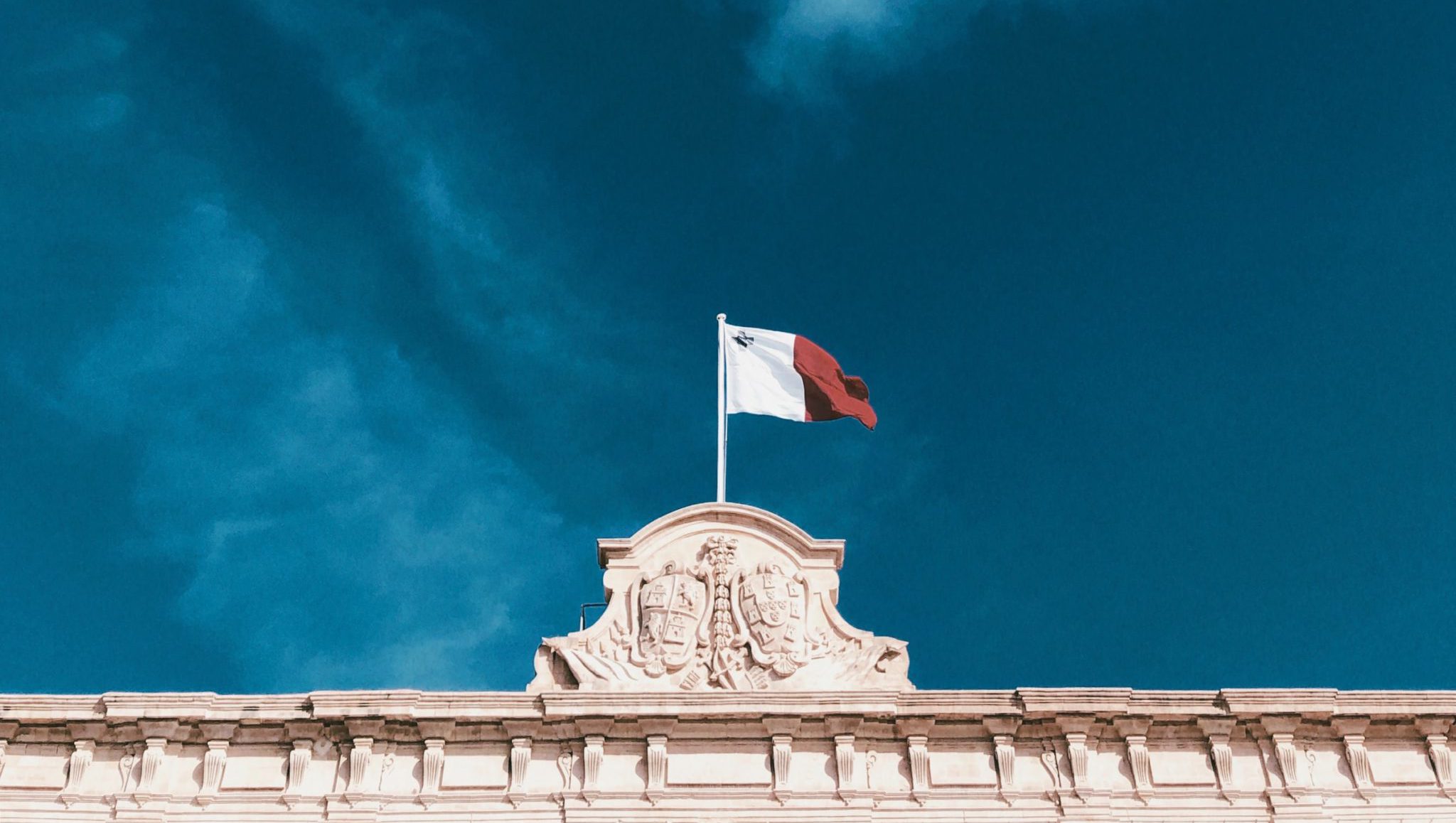
The Maltese people have voted and had their say on who should lead the country through to the end of this turbulent decade.
The contest between the two major parties was pitched as a contest between youth and experience, with both the PN and the PL leaning into that characterisation with apparent confidence.
We’ll know how it all plays out in a few hours, although the final polls released in the days prior to election day indicate that Labour will cruise to another landslide victory.
PN Leader Alex Borg has undoubtedly re-energised and united his party to a level unseen since the departure of Simon Busuttil in 2017. Whether that energy and unity can survive the sort of crushing defeat predicted in the opinion polls may very well be his next challenge.
While we wait for the result of the 2026 general election, here are some observations about the campaign.
Digital tools and prediction markets
The last month has seen several new digital tools come online related to the election. My personal favourite is vot.mt, which allows users to see how their vote was inherited in previous elections. This is an exercise I used to do manually, so I now eagerly await the integration of the latest results to see if, as happened in a previous election, my vote mattered all the way down to number 15.
The election also made it to Polymarket, the US platform that allows users to bet on all sorts of real-world outcomes. As of this morning, over $900,000 has been staked on different predictions, including the next Prime Minister, the winning party, the turnout, the party in third place, and of course, the margin of victory.
How that compares to wagers on the election placed with Malta’s underground gambling network is unknown, with the Malta Gaming Authority saying it “cannot speculate” on the scale of such activity.
Don’t believe the numbers if you don’t want to – but don’t get personal
One of the uglier aspects of this election – apart from the rather shocking display of Islamophobia and the dehumanising discourse surrounding the foreign workers so many critical services depend on – were the attacks directed at pollsters who published inconvenient survey results.
It’s worth remembering that a poll indicating that a given party is expected to win by a large margin cuts both ways. It can certainly take the wind out of the sails of the party predicted to lose, starving it of the volunteering efforts and financial resources it needs to mount an effective campaign. But it can also lead to complacency among the winning party’s voters.
Some of the personal attacks directed at Malta’s pollsters during this campaign were simply naked attempts to crucify the messenger bearing bad news.
It is unlikely that the surveys turn out to be completely wrong, given their track record. Many cite the 2024 European Parliament elections, which represent an outlier, but that discrepancy has also been explained as the result of the fact that such elections do not directly impact our daily lives.
Esprimi CEO Morgan Parnis, who works on the surveys published in Times of Malta, recounted a revealing anecdote in the last episode of WhosWhoTalks before the election. He said that during the 2017 election campaign, when he first started conducting polls, the then-publisher refrained from publishing the final one as the gap between the parties "seemed impossible" – yet the pollster was proven right.
Even if the polls do turn out to be well off the actual result, I will look forward to the analysis of the reasons for the difference – not attack professionals doing their job.
Experts should be questioned and held to a high standard, yes. But attempting to undermine their credibility because you don’t like what they are saying is simply churlish behaviour that does no one any good.
The mass transit question
Both parties made much of their respective proposals to build a mass transit system centred on rail. The Labour Party tried to rubbish the PN’s insistence that it could build a functioning line in just five years. Notably, Robert Abela appeared frustrated that anyone is even entertaining the notion, asking a gathering of Malta’s top business leaders whether they really believe that it’s as simple as “just starting to dig”.
I’ll be frank. I don’t buy either party’s proposal. The Prime Minister’s insistence on the need for studies conducted by ARUP may seem like the more serious approach, but I remain highly sceptical that a fixed route system can deliver the utility expected by a population accustomed to the comfort of a personal vehicle.
Whether the price tag is €2 billion or €4 billion – investing into real upgrades to the bus network and making sure that buses can beat the traffic through dedicated lanes is surely a far cheaper, quicker and more effective alternative. Why that has yet to be seriously considered remains a mystery.
The elusive ‘new economic niches’
During the campaign, the PN continued to hammer home the message that much of Malta’s economic success rests on the development of sectors it nurtured, such as financial services, iGaming and the maritime industry.
This was not a new development. During the 2022 campaign, the party had promised to invest in AI applications, 3D printing, esports, video game production, and – most prominently but least convincingly – the metaverse.
This time round, it primarily focused on the nascent space sector, where the PN says Malta can play a role in downstream services such as satellite connectivity and data collection, storage and analysis, and on establishing a clean fuel bunkering hub on Hurd’s Bank.
The issue, in my mind, is that barring the bunkering hub proposal (more on that in a minute), the current Government is already taking proactive action to develop most of these sectors.
In the esports sector, Gaming Malta has been a tireless promoter of the country, managing to secure multi-year deals with two of the largest tournament organisers to host competitions in Malta and facilitating esports teams opting to use our country as a European base. The same goes for video game development, where Base Camp has proven to be an effective launchpad for startups.
In the new space sector, Xjenza Malta has been striving to put Malta on the map for private investment in this new frontier, with work ongoing on a Space Activities Act. In these efforts, the agency is self-consciously emulating previous success in the maritime and iGaming sectors.
If its promised economic sectors are already in the works, where that leaves the PN is something of an open question. It may promise to accelerate investment in these areas, but any level-headed assessment will need to recognise that the development of new economic niches is a slow process with many risks along the way.
The Hurd’s Bank play
It is a known fact that the Maltese authorities have been reluctant to assume any legal jurisdiction over Hurd’s Bank, which is a hotbed of illicit activity. Even more concerning are the players involved, from Russia’s “shadow fleet” of tankers to smugglers of Libyan oil connected to the country’s warlords.
Call it scaremongering, but Foreign Affairs Minister Ian Borg’s argument that taking over an area of particular geopolitical sensitivity to construct a fuel hub could make Malta a target does raise questions about national security.
Renowned maritime lawyer Ann Fenech’s counterpoint that extending Malta’s jurisdiction to Hurd’s Bank would in fact bring “a sense of order” to the activities should certainly not be dismissed, and I for one took a degree of comfort from her willingness to stake her reputation in backing the idea – though I’m far from being fully convinced.
That Malta has not yet fully exploited its strategic geographic position in developing a major bunkering sector seems clear. Back in 2022, Enemed CEO Kevin Chircop floated the idea of reclaiming land off Birżebbuġa – an option that also carries an environmental cost – to service the fuelling needs of ships passing through the Med.
Regardless of the precise location, bunkering – especially of the sort of green fuels mentioned by the PN, like LNG and ammonia – seems worth looking into.
But certainly not if there’s even a hint that it can jeapordise Malta’s security.
Property is still king
The proposals by both main parties to effectively eliminate the tax on property inheritance were largely received well, not only reflecting the Maltese population’s deep attachment to real estate as a primary store of wealth, but also increasing its attractiveness.
That’s a major concern. In a country where overdevelopment consistently ranks among people’s top concerns, where youths leaving the country cite the suffocating feeling of a never-ending construction boom and limited green spaces continue to be eaten up, making property an even more attractive investment seems like a wrong-headed attempt to win votes without thinking through the consequences.
Setting aside the regressive nature of the measure, where the wealthiest benefit most and the poorest do not benefit at all, it also diverts much needed capital away from companies and into the real estate market.
Real estate essentially extracts value from other sectors. As iGaming and finanical services took off, rents increased, thereby increasing property prices. The trend continued with the arrival of over 100,000 foreign workers. Property itself creates little, but it captures part of the value created by other engines of the economy.
There’s a good reason that the default investment of many Maltese is in property. The returns on property generally far outstrip what can be gained from bonds and equities. That means more money is poured into real estate than into innovative companies creating wealth.
What Malta needs is an alternative vehicle for investment, as recently pointed out by Chamber of SMEs President Paul Abela.
Until we have that, expect more capital to be deployed into the housing market instead of being used to support the growth and expansion of local firms.
Going beyond mass tourism
Responding to growing concerns about overtourism, both the PL and PN promised that Malta would be adjusting its tourism strategy to focus more on quality than quantity.
Worth highlighting here is that action is already being taken to limit tourism numbers.
Industry leaders describe the logic that has driven Malta’s tourism strategy thus far as a “volume-growth loop”, where demand for tourists arises from the available bedspace.
In other words, as more hotels open their doors and more homes are turned into short-let accommodation, the country must attract more tourists to make sure they are filled.
As MHRA President Tony Zahra put it: “It’s not a question of limiting the numbers coming in. It’s about limiting the supply.”
On WhosWhoTalks, Tourism Minister Ian Borg pointed to a legal reform pushed through in April as the beginning of a change of course.
The new regulations, he said, prioritise the renovation or rebuilding of existing hotels, rather than constructing new ones, while also removing a controversial provision that allowed hotels to build two additional floors over other types of properties.
Anyone looking at turning a residential unit into tourist accommodation also faces a tighter list of requirements, effectively limiting the types of properties eligible and increasing the up-front investment required.
Explaining the rationale, Dr Borg said: “We started by looking at capacity. The more beds you add, the more pressure there is to create new flight connections to attract more tourists. We’re not intervening in the market – but we’re sending a clear signal.”
Rewarding bad behaviour
Speaking of clear signals, there is little doubt that Malta remains a place that rewards bad behaviour (or in the more colourful Maltese version: min ħ*** mexa). One needs to look no further than the legal notices tabled – but not passed, thanks to public pressure – to simply regularise almost any illegal development.
Those legal notices were tabled on the same day as an arguably even more egregious piece of legislation, Bill 142, which allows taxpayers to regularise tax offences for a flat fee. Anyone making use of the mechanism who is also facing criminal charges over related offences, such as money laundering and fraud, will also have them dropped.
The mechanism has already been used by several people linked to alleged corrupt activity and fraud, serving as a get-out-of-jail-free card.
On the campaign trail, Prime Minister Robert Abela defended the measure, pointing to the revenues raised as tax dodgers regularise their position.
In effect, however, the Government is turning itself into the launderer, with alleged criminals paying a fee to evade justice, undermining the work of police who, in at least one instance, had spent years compiling the case.
The PN, in keeping with a campaign light on references to corruption that has come to be seen as a passé and losing strategy, hardly spoke about the matter.
While it pales into insignificance, Economy Minister Silvio Schembri made it clear while on the campaign trail that the Labour Party will continue to reward bad behaviour, telling a gathering of hunters that it would reduce fines and overturn lifetime bans.
The overall message being sent is that following the law is for fools – and that should be of concern to everyone.
Who’s paying for everything?
Armin van Buuren, Dimitri Vegas, La Bouche, Vanco, Christina Novelli.
That’s not a festival line-up. Those are the artists who performed at PL and PN events over the last seven days, with professional stage setups, lights and sound systems.
Let’s not beat around the bush. We need a party and campaign finance law with teeth.
Can Cassola gain Momentum?
Arnold Cassola once again provided a good dose of common sense delivered in his inimicable style, equal parts blunt, outraged and funny. With the movement behind his impressive result in the 2024 MEP election coalescing into a real political party – Momentum – many probably hoped that this could be the year for a third political force to enter Parliament.
Alas, politicians with Prof. Cassola’s charisma are a rare breed, and professionally impressive the other Momentum candidates may be, none have, as yet, the wit or gravitas required to stand on their own two feet as legitimate politicians in their own right. That is not to say that there is no hope, but rather that a political project like this needs time and a lot of work.
I hope the commitment is there, because Momentum’s manifesto provides the basis for a real shift in Malta’s economy, with several in-depth proposals meant to boost research and innovation paired with more novel suggestions, such as an audit of the public sector workforce and incentives to companies giving their workers shares in the business.
As in previous elections, ADPD presented a raft of innovative and progressive proposals, but often failed to communicate them clearly. Speaking on WhosWhoTalks, party leader Sandra Gauci floundered when presented with an opportunity to speak about a wealth tax proposed by the party.
Regardless of the merits or otherwise of the proposal, ADPD might need to take a leaf out of the UK’s Green Party Leader Zach Polanski, who has proven himself a skilled communicator capable of conveying a policy message that can be unpopular at first glance.
On a more positive note, Sandra Gauci also provided one of the most memorable and heartfelt moments of the campaign when she spoke about her father and her own working class background.
I believe a third party in Parliament is essential to act as a counter-balance to the duopoly enjoyed by the PL and PN since Malta achieved Independence. However, both Momentum and ADPD need more polish, more effort, more training, and more money if they hope to achieve electoral success. I feel they are a long way off from winning enough people's trust to present a credible alternative.
The question we still don’t have an answer to
The last parliament was sworn in on 7th May 2022. It was dissolved on 27th April 2026.
That’s less than four years into a five-year mandate.
Quoting Daphne Caruana Galizia: “Prime Ministers do not call a general election a year ahead of time, and shave a whole year off their term in government, because things are going well. They do it because things are going badly, or set to explode.”
Terrifyingly prescient language aside, we still don’t know why Robert Abela decided to take the country to the polls a year early. His claims that the country needs a Government with a clear long-term mandate to navigate the headwinds from the geopolitical crisis unfolding in the Middle East fall rather flat given the rosy picture painted of Malta’s economic stability throughout the campaign
Economy Minister Silvio Schembri downplayed the contradiction, telling sister portal WhosWho.mt that the Labour Government under Robert Abela has navigated several critical challenges, from COVID-19 and the ensuing lockdowns and supply chain crisis, to Russia’s invasion of Ukraine and the imported energy price shock, to the ongoing genocide taking place on the shores of the Mediterranean and related conflicts.
He might have added Malta’s greylisting too, which, albeit self-inflicted, was then handled well, allowing Malta to exit the grey list within a year.
That experience is noting to scoff at. Whatever anyone may think of the Labour Government since Dr Abela became its Leader in January 2020, it has certainly faced crisis after crisis. Robert Abela and his Cabinet have been through the crucible and found equal to the challenge.
To me, that makes the geopolitical excuse even less convincing, although news that Malta’s fuel hedging agreement is set to end in August with no replacement in place may given an indication of the Government’s thinking. If that means that the subsidies in place since 2022 will become unaffordable, leading to an increase in energy and fuel prices, that would well merit a snap election.
The lesson of 2013, when deeply unpopular energy surcharges underpinned the perfect storm of forces that swept Labour to power, is not easily forgotten – as Finance Minister Clyde Caruana admitted last November.
Just as plausible, however, is that the Prime Minister is worried about the political fallout from a high-profile trial set to begin in the coming months.
That something taking place this summer will reveal itself as the real reason for the early election is almost certain. What that is, we’ll have to find out.
Malta now has more €1,500,000+ homes for sale than ones under €250,000
A full quarter of the homes available for no more than €250,000 are in Gozo
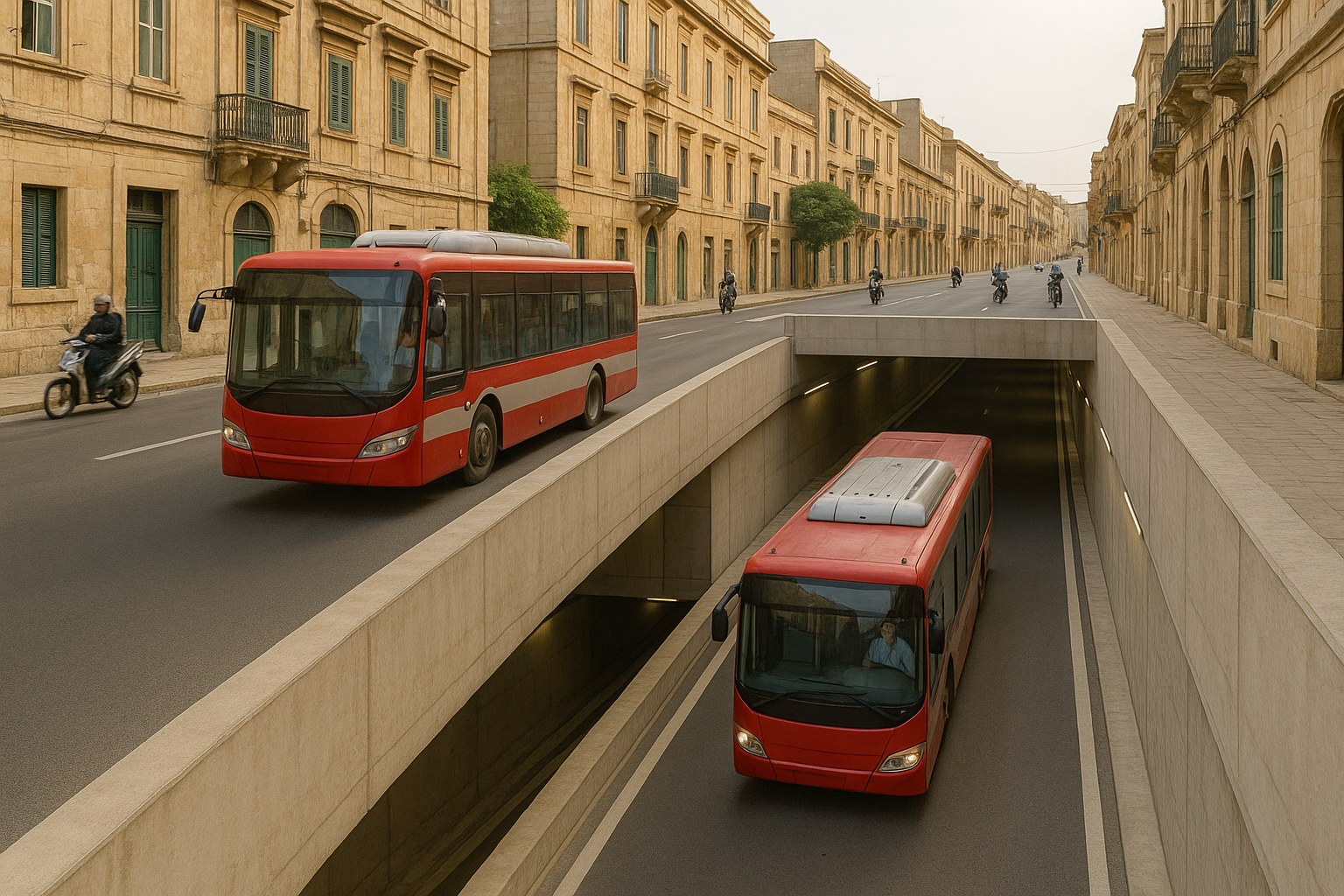
Perit proposes underground transport network to tackle traffic, flooding and lack of open spaces
He calls the project 'A Second Malta'
AX Group calls for destination hubs as part of tourism strategy shift in Budget recommendations
Development of a national employment and skills strategy, investment in infrastructure, tourism strategy shift are its top priorities