


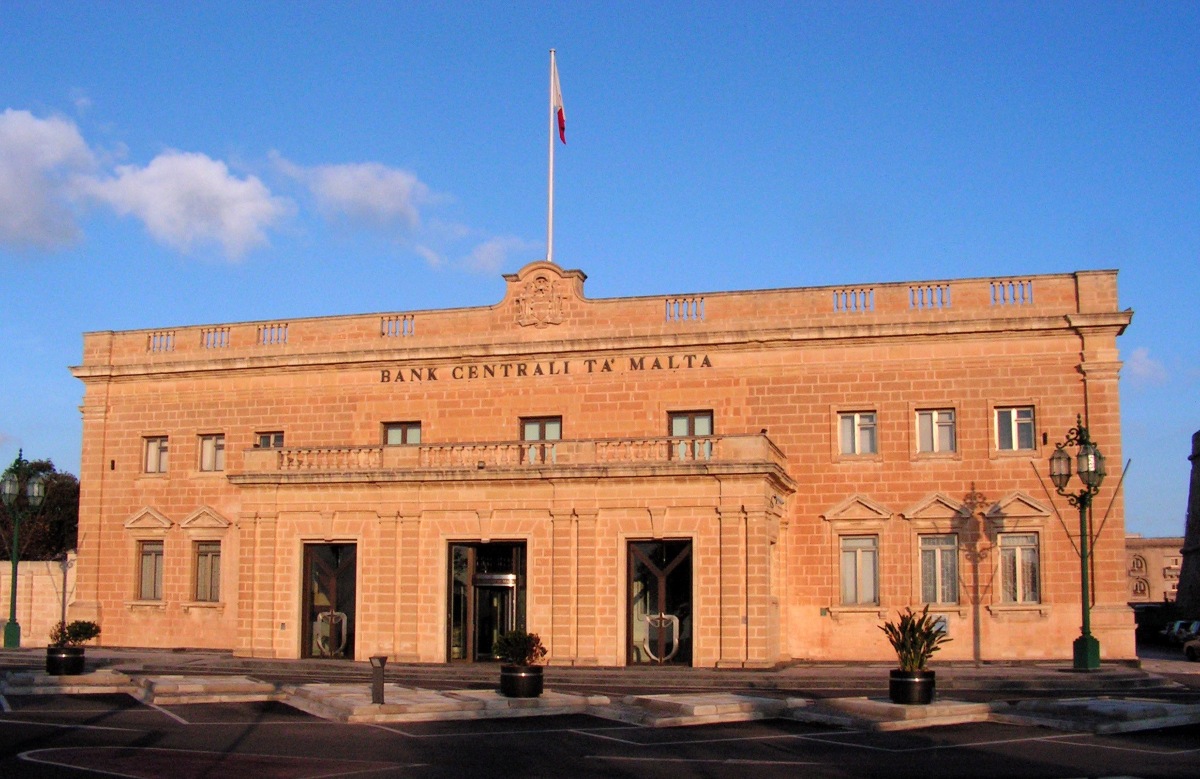
The Central Bank of Malta has revised its economic projections, indicating a cooling in growth momentum over the coming years, though the country’s economy is expected to remain resilient overall.
Following an expansion of 6.0 per cent in 2024, real GDP growth is forecast to moderate to 4.0 per cent in 2025, and then ease further to 3.3 per cent by 2027.
According to the Bank’s June 2025 forecast, domestic demand – particularly private consumption and recovering investment – will continue to underpin economic performance, while net exports, mainly in services, are also set to contribute positively, notwithstanding to a lesser extent.
Labour market cooling, but unemployment remains low
Malta’s labour market is expected to gradually soften, with employment growth slowing from 5.1 per cent in 2024 to 2.3 per cent in both 2026 and 2027. Nevertheless, the unemployment rate is projected to stabilise at 3.0 per cent, slightly down from 3.1 per cent in 2024.
As labour market tightness eases and inflation moderates, wage growth is forecast to decelerate from 5.9 per cent in 2024 to 4.4 per cent in 2025, continuing on a downward trend thereafter.
Inflation outlook softens further
Headline inflation, measured by the Harmonised Index of Consumer Prices (HICP), is expected to gradually decline from 2.4 per cent in 2024 to 2.0 per cent in 2027. Nonetheless, inflation for 2025 and 2026 has been revised slightly upward – by 0.2 and 0.1 percentage points respectively – reflecting higher-than-expected recent data and services sector inflation.
Public finances to improve gradually
On the fiscal front, the general government deficit is projected to narrow from -3.7 per cent of GDP in 2024 to -2.7 per cent by 2027. The debt-to-GDP ratio is expected to rise modestly to 48.6 per cent by 2026, where it is forecast to remain.
The forecast deficit-to-GDP ratio between 2025 and 2027 climbed upwards when compared to previous projections, although this is is balanced by downward revisions to the debt ratio.
Risks and external pressures
The Central Bank described risks to economic activity as “broadly balanced”. Potential downside risks include further geopolitical tensions, escalating trade barriers, and weaker external demand. Upside potential could come from stronger-than-expected labour market dynamics, boosting private consumption and investment.
Inflation risks are similarly mixed. On one hand, EU retaliation to US tariffs or global trade disruptions could push prices higher. On the other, a sharp drop in imported inflation may occur if global demand slows more than anticipated.
Fiscal risks remain tilted to the downside, primarily due to possible increases in public spending, including on pensions and wages in future years.


‘Immense pride’: Gozo business lobbies welcome Victoria’s selection as European Capital of Culture
Victoria (Rabat) will hold the title of European Capital of Culture in 2031

Digital euro moves closer to reality as ECB launches first wholesale system
European policymakers are attempting to modernise the euro for an increasingly digital financial system

Number of part-timers also holding full-time jobs increases 12.5% year on year
In April 2026, administrative and information and communication contributed mostly to the increase in full-time employment