


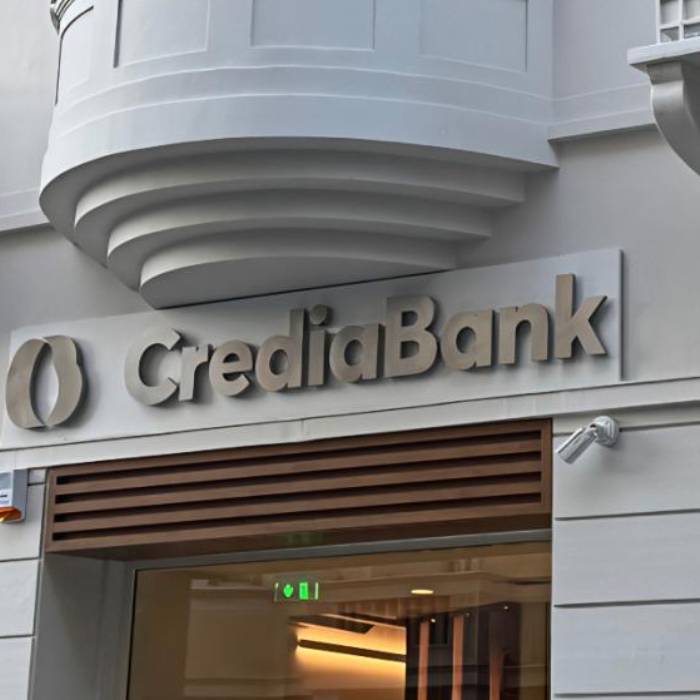
Earlier this week, while the major focus of attention by the investing public would have surely been on the unfolding developments in the Middle East and the significant surge in the price of oil on Monday morning, CrediaBank S.A. held its Capital Markets Day in which it delivered a very detailed presentation unveiling its ambitious strategic vision. The upcoming purchase of a majority stake in HSBC Bank Malta plc is central to CrediaBank’s next phase of growth given that this acquisition will essentially double the total assets of the CrediaBank group upon consolidation.
By way of summary, CrediaBank signed a Definitive Agreement in December 2025 to acquire 70.03 per cent of HSBC Malta from HSBC Continental Europe for a cash consideration of €200 million (or €0.793 per share). Subject to all necessary regulatory approvals, CrediaBank stated that the transaction is expected to be finalised by Q1 2027 (in 12 months’ time effectively). As disclosed in the original announcement of 16th September 2025, once CrediaBank will become the majority shareholder of HSBC Malta, it will then launch a tender offer for minority shareholders (targeted for completion by June 2027) at a price of €1.44 per share (a price-to-book multiple of 0.83x based on the net asset value of €1.736 per share as at December 2025).
Since HSBC Bank Malta plc is the second-largest credit institution in Malta when ranked in terms of total assets (commanding a 24 per cent market share) and is the third-largest company listed on the Malta Stock Exchange with a market capitalisation exceeding €500 million, the upcoming plans by CrediaBank could prove to be important for the Maltese banking sector and the domestic capital markets.
Strategic rationale for Malta acquisition
The acquisition of HSBC Malta is a very capital-efficient transaction for CrediaBank since the agreed price of €0.793 per share (equivalent to a price-to-book multiple of 0.457 times based on the December 2025 book value) results in the crystallisation of negative goodwill (or ‘badwill’) of over €200 million upon consolidation of HSBC Malta into CrediaBank which is expected in the first half of 2027. In other words, the accounting gain from acquiring HSBC Malta at a steep discount to book value effectively offsets the entire purchase price being paid by CrediaBank.
During the presentation, CrediaBank’s CEO Eleni Vrettou explained that the strategic rationale for the acquisition of HSBC Malta is threefold as follows:
- Malta represents one of the fastest-growing economies in the EU, with real GDP growth of 3.9 per cent forecasted for 2025 (materially above the EU average of approximately 1.5 per cent), one of the most resilient economies and a strong rating by international credit rating agencies;
- HSBC Malta operates in a highly-concentrated sector where the top three banks control 84 per cent of total assets. However, in CrediaBank’s own words, the bank has been operating, under “non-core status” within the HSBC Group for over a decade – underinvested, de-leveraged, and operating with a risk appetite that the CEO believes is ill-suited for the opportunities available across Malta’s expanding economy.
- The combination of the two banks creates compelling synergies and both banks possess highly complementary strengths.
Cost Synergies
The Business Plan states that the management of CrediaBank estimate that HSBC Malta currently incurs circa €40 million annually in charges which are payable to HSBC Group encompassing offshore team costs, technology licensing, group overhead allocations, and mark-ups on services. The CEO of CrediaBank stated that their aim is to eliminate at least half of these charges (equivalent to €20 million annually) by replacing offshore functions with in-house capabilities, renegotiating technology arrangements, and removing the HSBC Group layering entirely. This is important news for the shareholders of HSBC Malta.
Supercharging Malta
One of the key strategic pillars of CrediaBank in the years ahead is the successful integration of the Malta bank once all approvals are forthcoming. In the Capital Market Day presentation, CrediaBank labelled this key growth driver as ‘Supercharge Malta’. The central thinking within CrediaBank is that for several years, HSBC Malta operated as a bank in ‘run-off mode’ or ‘managed decline’ despite the very strong growth rates experienced by the Maltese economy. They substantiated this by claiming that the loan-to-deposit ratio of HSBC Malta dropped to just 42 per cent in 2025, the balance sheet is substantially under-leveraged, and the corporate and SME lending books are materially below where they should be given Malta’s economic dynamism.
CrediaBank aims to switch from ‘run-off mode’ to ‘active growth’ mode and has identified several specific growth drivers for Malta. On the commercial banking side, the Chief Strategy Officer explained that there are several underserved segments of the economy. The management of CrediaBank estimates that HSBC Malta could originate in excess of €400 million in additional new loans by a shift in risk appetite and an enhanced relationship management model.
The second major driver is the development of the SME and small business segment using CrediaBank’s proprietary relationship-manager-centric origination model. This model will be transplanted to Malta, where SME financing needs remain structurally underserved.
Third, CrediaBank plans to leverage HSBC Malta’s established wealth management and bancassurance platform to drive fee income growth across both countries. They referred to Malta’s household asset allocation which remains heavily skewed towards deposits (65 per cent versus the EU average of 31 per cent), thereby presenting a substantial migration opportunity towards managed funds and insurance products especially in the light of the high level of household wealth in Malta which is well-above the EU average. One of the key objectives is a more attractive wealth management offering.
Moreover, CrediaBank intends to use Malta as a gateway to attract Greek and international high-net-worth clients into its wealth management offering taking into consideration Malta’s favourable regulatory and tax environment which makes it a natural domicile for cross-border wealth planning.
A transformational shift at HSBC Malta
The Business Plan delivered during the Capital Markets Day makes it amply clear that CrediaBank is not acquiring HSBC Malta to simply manage it in its present state despite the attractive returns currently being achieved. It entered into an agreement to purchase HSBC Malta to begin a major transformation exercise – to re-lever the balance sheet, rebuild the commercial banking franchise, accelerate digital transformation, and unlock what they define to be “the considerable untapped potential in wealth management and insurance”. Within this context, it is also worth mentioning that CrediaBank is currently in exclusive talks to acquire a majority stake in a leading brokerage house in Greece (Pantelakis Securities) in order to increase fee income, become a leading player in Greek brokerage and also expand the offering into Malta. This could be very important for Malta’s capital markets given the higher level of development of the stock market in Athens.
The implications of the new strategic owner taking over the helm of HSBC Malta as from next year can be wide-ranging for the Maltese banking and investment services sector. The entry of an ambitious, growth-oriented and digitally-enabled challenger bank (as they define themselves in Greece) with deep SME expertise and a demonstrable track record of operational transformation into Malta’s concentrated banking market, could lead to various changes across the wider financial services landscape in due course.
The article contains public information only and is published solely for informational purposes. It should not be construed as a solicitation or an offer to buy or sell any securities or related financial instruments. No representation or warranty, either expressed or implied, is provided in relation to the accuracy, completeness or reliability of the information contained herein, nor is it intended to be a complete statement or summary of the securities, markets or developments referred to in this article. Rizzo, Farrugia & Co. (Stockbrokers) Ltd (“Rizzo Farrugia”) is under no obligation to update or keep current the information contained herein. Since the buying and selling of securities by any person is dependent on that person’s financial situation and an assessment of the suitability and appropriateness of the proposed transaction, no person should act upon any recommendation in this article without first obtaining investment advice. Rizzo Farrugia, its directors, the author of this article, other employees or clients may have or have had interests in the securities referred to herein and may at any time make purchases and/or sales in them as principal or agent. Furthermore, Rizzo Farrugia may have or have had a relationship with or may provide or has provided other services of a corporate nature to companies herein mentioned. Stock markets are volatile and subject to fluctuations which cannot be reasonably foreseen. Past performance is not necessarily indicative of future results. Foreign currency rates of exchange may adversely affect the value, price or income of any security mentioned in this article. Neither Rizzo Farrugia, nor any of its directors or employees accepts any liability for any loss or damage arising out of the use of all or any part of this article.


A Liquidity Provider for the corporate bond market
Edward Rizzo suggests the Malta Development Bank could play an important role in revitalising the secondary market for corporate bonds

What if we blend iTunes, Uber & Netflix into banking?
Instant payments, T+1, and AI. Like iTunes, Uber and Netflix for finance!

Devising an Equity Market Development Programme
The equity market suffers from chronically thin trading volumes especially in the aftermath of the pandemic