


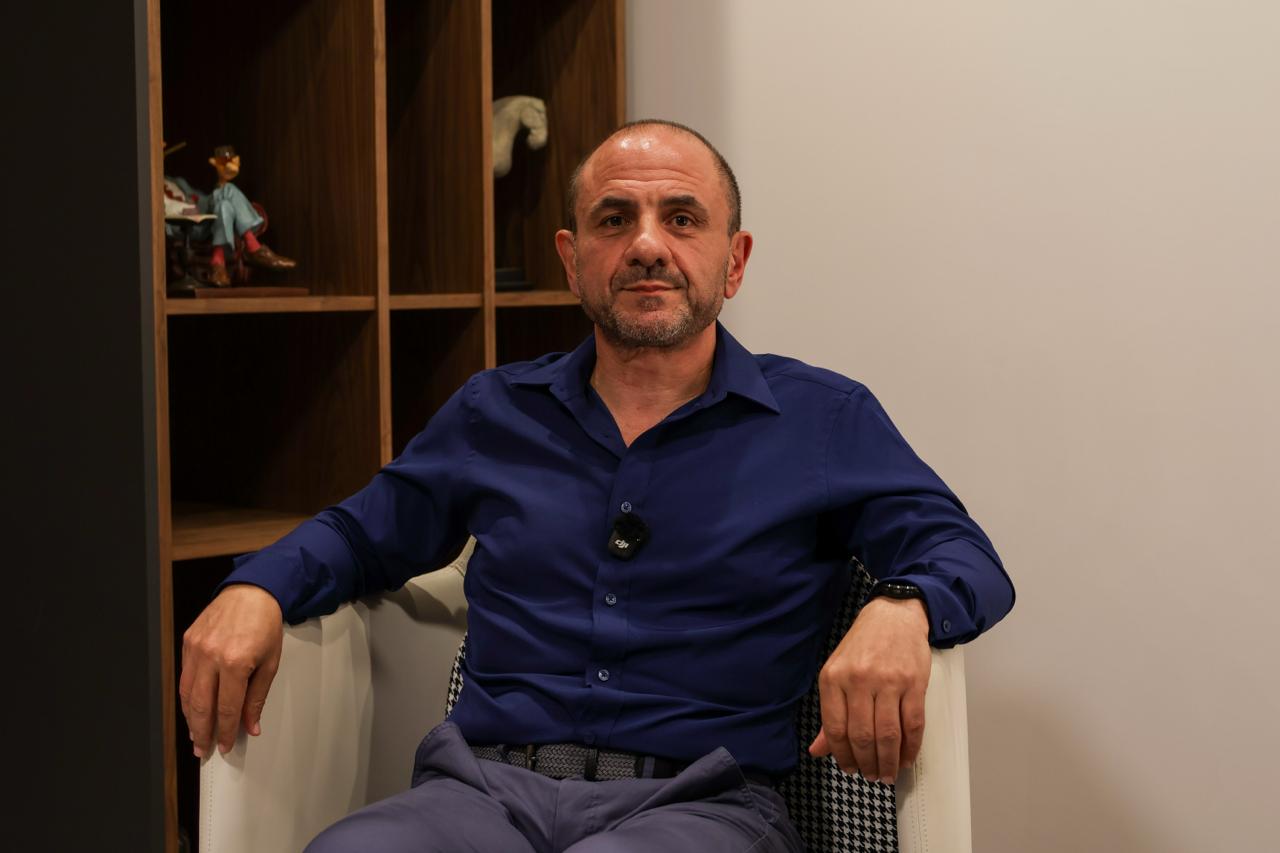
The Malta Developers Association (MDA) is in favour of changing the Local Plans, its President Michael Stivala told BusinessNow.mt, stressing that the plans need to "reflect today's realities."
Prime Minister Robert Abela recently suggested that the local plans could be revised to address "injustices and anomalies" created by 2006 revisions, if no consensus is found on the highly controversial planning reforms issued for public consultation last year. In reaction, the Ġustizzja għal Artna campaign had said it was "extremely concerned" by the Prime Minister's suggestion.
During an interview with BusinessNow.mt, Mr Stivala was asked about the idea of changing the local plans in general, to which he said that the MDA has been calling for it for years.
The local plans are nearly 20-years-old, he says, noting that the circumstances from back then have changed and that there has been a leap in Malta's economy over the years.
"This in itself shows that the needs of the country have changed. We need local plans that reflect the realities of today. There is a need for change in nearly all localities."
"Every locality has its own story, so you cannot say what general change is needed, as they all have differences," he says.
Pressed to state what kind of change he believes is needed, the MDA President says there should be no more building on virgin ODZ land.
"This is an important principle, that on virgin land, there should not be any construction." He said.
While he was strong in his statement regarding virgin land, he did not mention controversial rules that have allowed rural structures to be turned into larger villas in his answer.
In terms of building heights, he says the local plans are "so unclear that you have streets with half the buildings at one height, and the other half at another height. We need to look at our streets, and the plans must reflect today's realities."
Local plans must provide the direction for where the country will head, he says.
Now that the country has the Vision 2050 document, construction and plans need to be attached to that vision, Mr Stivala adds.
Regarding the proposed planning reforms, he says that in general there is consensus that a reform of the planning and appeals laws is needed, and that there should have been more consultation before the proposals were issued.
Mr Stivala holds that the status quo is not good for developers, nor for eNGOs or the public. He says it is unacceptable for someone to invest millions of euros and not have clarity on the rules, mentioning that there are many different interpretations of regulations.
Asked whether he believes consensus will be found on the planning reforms issued by the government, he says there is a possibility of finding consensus "with people of goodwill who want the system to work."
Nobody wants the system as it is today, he continues, noting the length of time before a final decision is taken on an application.
"There are certain applications that take 6, 7 years," going through the whole process including appeals, he explains.
"No investor in any industry would want that. Today land costs millions of euros. We might not even be talking about a big developer, but an individual building up their home."
He said that everyone needs the reform. "It is important for the economy and also for families wanting to invest."
Told that for consensus to be found, there will likely need to be quite a bit of movement from what was originally proposed, he says that there were points developers themselves did not agree with.
"It is not a wish list for developers. If it was, we wouldn't say that there are certain points we don't agree with. There needs to be consensus, a serious discussion to find solutions. If there are capricious discussions for agreement not to be found, then obviously there will be difficulties. But I believe that through discussions between people of good will, we will find consensus."
Should consensus be required for local plan changes?
As for whether he believes that consensus should also be found on possible local plan changes, he argues that there are legal obligations for public consultation to take place.
"Then it is up to the government to decide. Ideally consensus is always found, but the government, that will be elected by the people, will take the decision. It cannot be the case that one does not move forward on everything unless consensus is found."
The country needs local plans that look long-term, he says.
He explains that the local plans today "are not leaving the product we want," highlighting criticism about Malta's uglification.
The solution, he argues, is to change the local plans and to change regulations. "If we continue doing everything in the same way we did before, you will end up with the same result. So we need to think about how, as a country, we can create a better product."
He says the MDA agrees with a proposal being made by the Chamber of Architects and Civil Engineers for an aesthetics policy.
"We agree. But we must have regulations that allow for better aesthetics. Today, as things stand, regulations tie architects' hands so much that the process has become a box-ticking exercise." Architects practically cannot even use their artistic talent to create more good-looking buildings, he says, due to a lack of flexibility in regulations.
Told that the designs seen in streets don't seem to show effort to keep a unified design or a beautiful aesthetic, and that this is likely not only the fault of the regulations, he says that regulations are part of it. "Today everything is gauged by the centimetre. If you stray from the regulations, the permit would not be granted, so many-a-time periti are cautious so that the permit will be granted."
Education system ‘stifles creativity’, Malta Employers’ chief says as association calls for ‘transformation’
Association's Director General says system is geared towards conformity

MFSA flags missing information in pension statements
Some pension statements omitted key details on investments, fees, contributions and account changes
Budget should support sustainable economic growth, promote financial stability – BOV
Maintaining a stable and predictable business environment, encouraging investment in productivity remain important, it said