


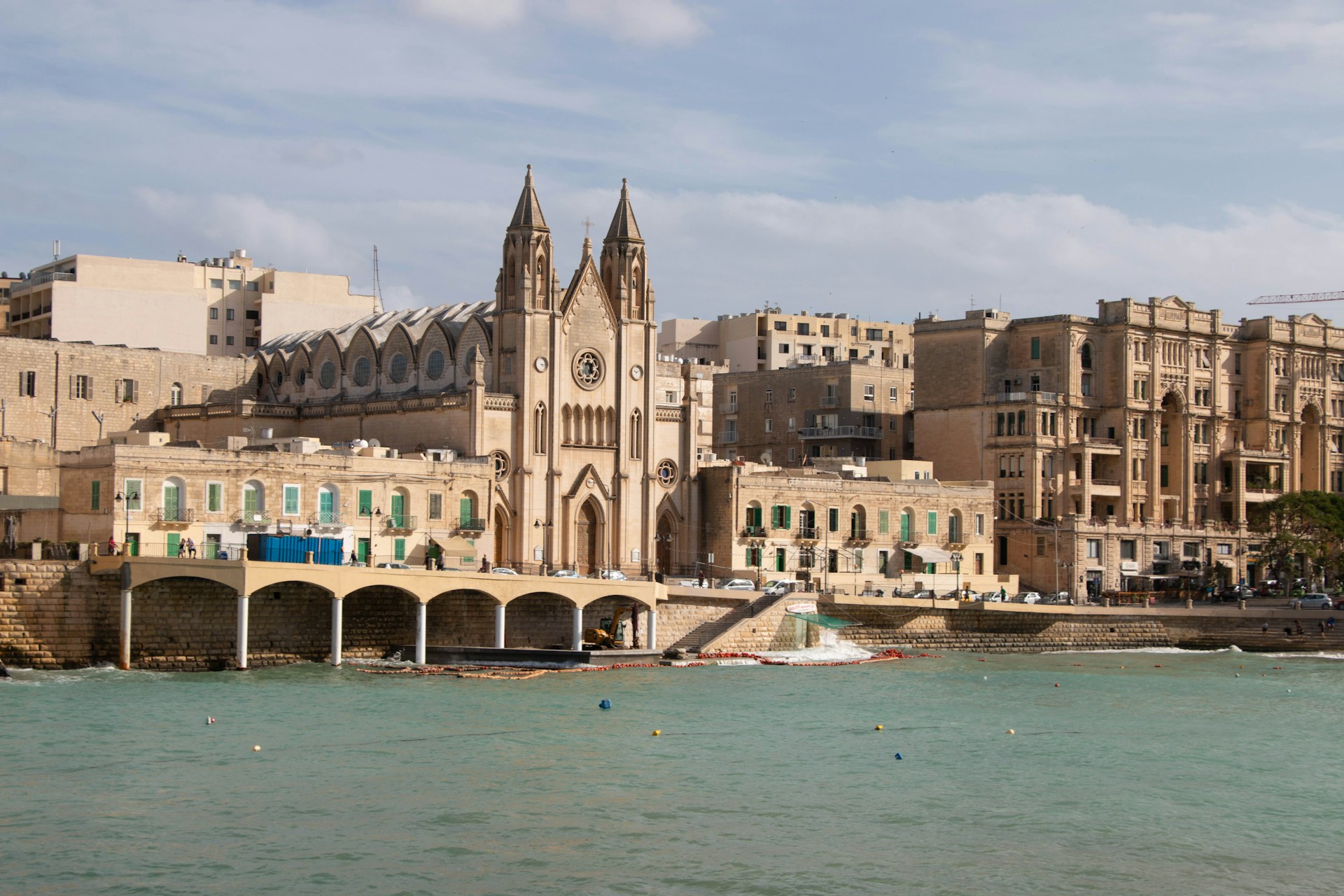
Malta’s sharp drop down the ranks of European countries with the best bathing waters may be the result of methodological factors that magnify occasional and temporary declines in water quality in certain beaches.
However, the “short-term pollution events” causing the decline are real, concerning, and an indication of the systems most under stress in Malta’s population-driven economic boom.
Last week, BusinessNow.mt reported that while Malta had the best coastal water quality in Europe back in 2016, as noted by the European Environment Agency, by 2025 it was only marginally above average.
That drop, says the Environmental Health Directorate (EHD), which is tasked with monitoring the water quality of Malta’s 87 registered beaches, must be put into context.
Asked to what it attributes the decline, the EHD says that based on its monitoring and investigations, “the principal causes associated with these results have been short-term and localised pollution events, including sewage overflows arising from both public and private sewer connections, stormwater runoff and other localised sources of contamination.”
“Such events,” it says, “are generally episodic and site-specific.”
In fact, a review of EHD announcements for the 2026 summer season indicates that most closures lasted less than a week.
In other words, Malta’s bathing water quality is essentially of high quality, but some beaches suffer from occasional situations where sewage ends up flowing into the sea. These situations tend to be short-lived as the authorities immediately step in to fix the problem.
Short as they may be, such episodes make a real difference to Malta’s water quality readings – potentially more so than in other countries.
“While the Bathing Water Directive requires monitoring at intervals not exceeding one month during the bathing season, Malta undertakes more stringent monitoring on a weekly basis,” says the EHD. “Other countries may not follow such a frequent schedule.”
Malta’s more intensive programme, it says, provides a higher-resolution picture of bathing water quality throughout the season and increases the likelihood of detecting short-term pollution events and temporary microbiological fluctuations.
“This ensures increased peace of mind for the public, but may also impact overall water quality results, especially when compared with countries with lower testing frequencies.”
That means that a short-term sewage overflow that would not even register in other countries’ datasets is captured and recorded in Malta, safeguarding swimmers’ health while downgrading its bathing water quality results.
Reacting to Malta’s drop down the European rankings, the EHD points out that the rankings only take into account the proportion of bathing waters classified as ‘excellent’.
“It should be noted that four countries which achieved a higher percentage of ‘excellent’ bathing waters than Malta in 2025 had bathing water sites classified as ‘poor’, whereas Malta recorded no bathing water sites with a ‘poor’ classification.”
The Malta Chamber reaction
Speaking to BusinessNow.mt, tourism operator and Council Member of The Malta Chamber of Commerce, Enterprise and Industry, Alan Arrigo, also highlights the fact that Malta’s swimming sites remain of a generally good quality, but does not shy away from describing the decline as a “trend”.
“It is no coincidence” that localities like St Julian’s, Sliema and St Paul’s Bay register some of the weakest results, he says. “These localities carry the highest density of accommodation, visitors and residents.”
“It would be a mistake, however, to read this as a problem belonging to a few coastal towns. It is a national one,” he continues. “Over the past decade Malta's population has grown from roughly 450,000 to an NSO end-of-year estimate of 588,254. The networks that carry that population, water and sewerage in particular, have not expanded at the same pace.
“Bathing water quality is simply one of the places where the gap becomes visible, because it is measured, published and difficult to argue with.”
The Malta Chamber's has long pushed for an update to Malta’s Strategic Plan for Environment and Development (SPED), which dates from 2015 and was due for review in 2020.
That review has still not happened.
“The Chamber calls for its urgent revision, supported by a carrying capacity assessment of Malta's built and natural environment.”
Mr Arrigo argues that development decisions “should be tested against whether waste, water, mobility and utility networks can actually absorb the proposed developments, using transparent and published criteria rather than case-by-case judgement.”
Asked whether this could pose a threat to Malta’s sun-and-sand proposition, Mr Arrigo says it already carries a cost.
“High-value visitors do not book on price,” he says. “They book on confidence, and confidence depends on the promise made before arrival matching the reality on the ground. A beach closure is visible in real time. It’s a guest standing on a beach in front of a sign. That is remembered far longer than any campaign.”
Mr Arrigo notes out that Malta's real spend per tourist has been falling in inflation-adjusted terms for a decade, as set out in The Malta Chamber's Rediscover to Align.
“Product quality erosion of this kind is one of the reasons why.”
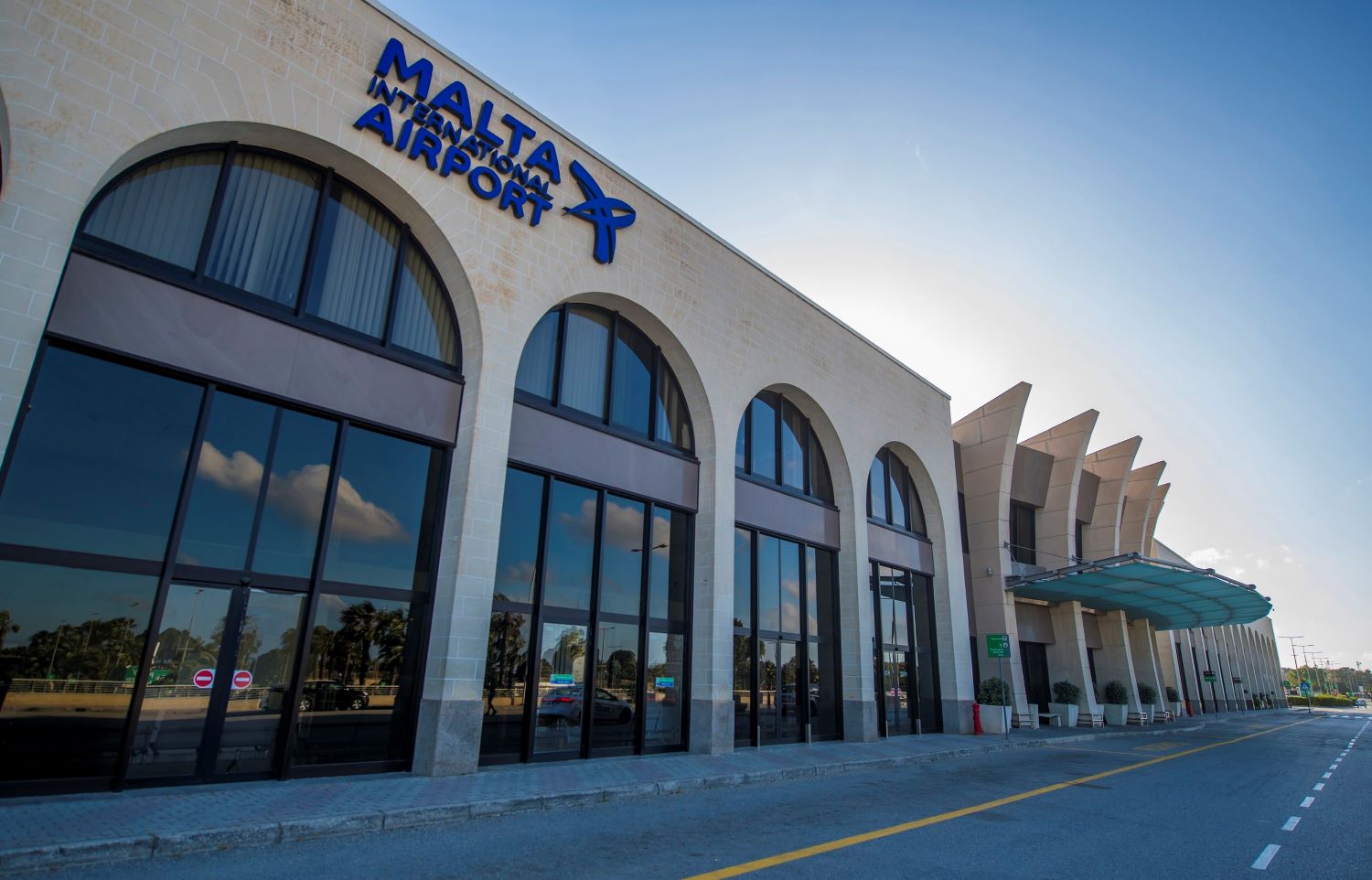
MIA sees emissions per passenger fall as traffic tops 10 million during 2025
Malta International Airport’s revenue increased by 9.9% to €157 million in 2025
MFSA warns public about website impersonating the Authority
The MFSA urged the public to exercise caution and verify website URLs and email addresses
Budget 2027: MMF proposes National Maritime Certification Centre, cadet scheme to address skills shortage
Maritime sector requires renewed attention and resources to enable it to achieve the set objectives, MMF says