


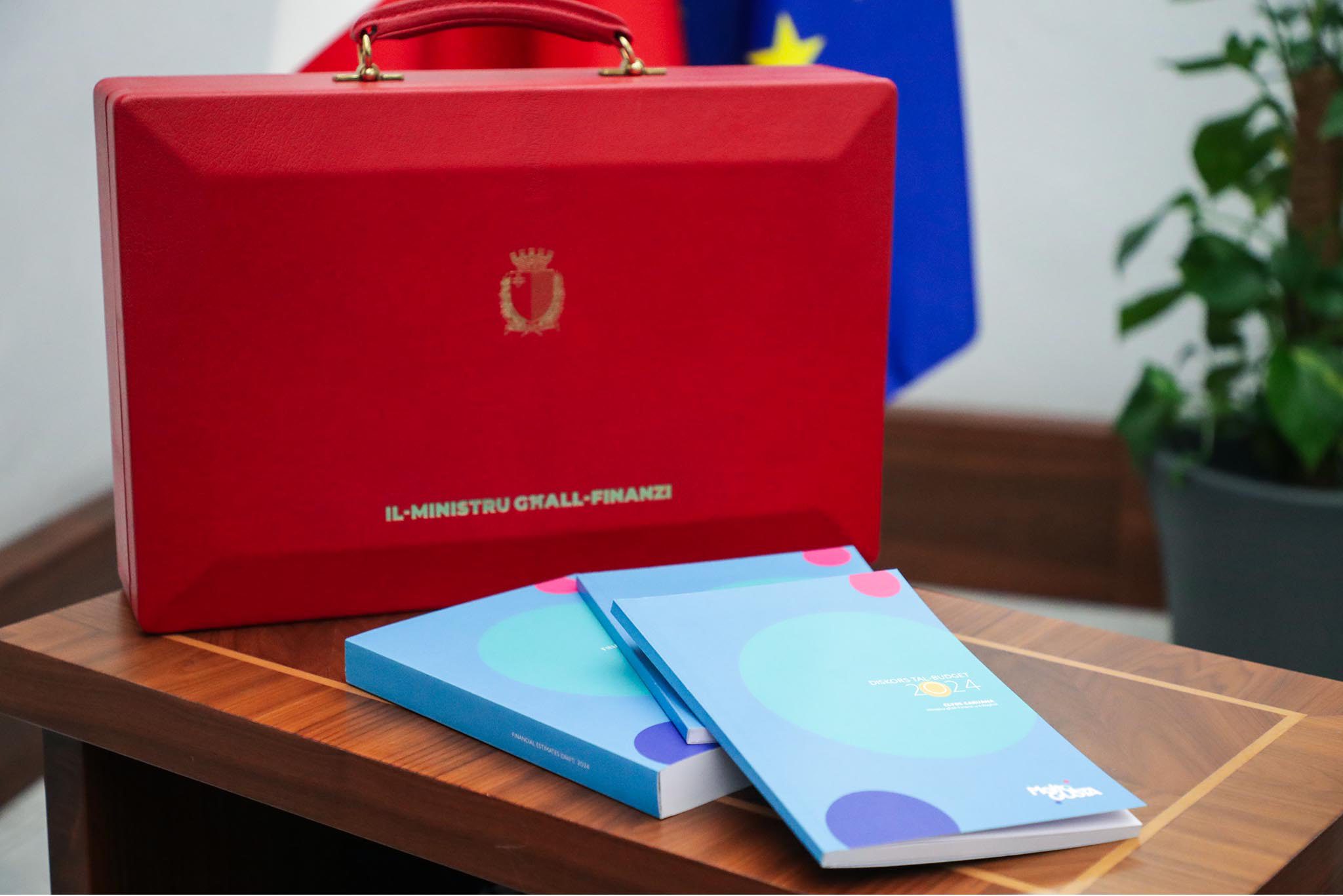
As Malta prepares for the presentation of Budget 2027 on Monday, business organisations and industry leaders are calling on Government to prioritise productivity, investment and long-term competitiveness, with proposals ranging from corporate tax reductions to financial incentives for artificial intelligence (AI) adoption.
A recurring concern is Malta's reliance on economic growth driven by increased employment and population, with businesses urging a shift towards generating greater economic value through productivity and innovation.
Tax reductions and improved access to funding
Among the most significant proposals are those put forward by the Malta Chamber of Commerce, Enterprise and Industry. The Chamber is proposing a reduction in the corporate tax rate from 35 per cent to 25 per cent, with a further reduction to 20 per cent for businesses meeting specified compliance requirements.
It is also calling for venture capital tax credits to encourage investment in Maltese start-ups, alongside an increase in qualifying research and innovation tax deductions from 175 per cent to 200 per cent.
To support business investment, the Chamber wants Government to establish a multi-year Transformation Fund covering digitalisation, cybersecurity and workforce development.
It has also proposed upfront payments on eligible grants to ease cash-flow pressures, particularly for smaller businesses that may struggle to finance investments before receiving Government assistance.
The Malta Chamber of SMEs then is calling for the introduction of a taxpayer points system that would drive treatment by the tax authorities. This points system would be administered by Malta’s Tax and Customs Administration, creating a compliance score. Under the proposed system, points would be deducted for defined failures and restored over time through a clean record.
Meanwhile, Aeroates CEO Giovanna Mirabile has called for targeted tax credits and performance-linked grants to help SMEs manage rising labour costs, skills shortages and employee turnover.
Supporting AI adoption and productivity
Technology investment has emerged as another major priority, with several organisations calling for incentives to help businesses adopt AI, automation and digital solutions.
The Malta Employers Association is advocating a shift towards productivity-led economic growth, proposing financial incentives for businesses investing in automation, AI and advanced manufacturing.
It has also called for a National AI Upskilling and Reskilling Fund to equip employees with the skills required by an increasingly digital economy.
Similarly, the Malta Chamber wants the €100 million digitalisation allocation announced in Budget 2026 to be renewed, alongside additional support for workforce training.
Jordan Bonello Gauci, Director of Business Development at KVLR Code, has called for simpler grant application procedures and targeted AI incentives.
He argues that administrative complexity and limited awareness of existing schemes can discourage SMEs from investing in technology, particularly in sectors such as construction, tourism and manufacturing.
Ms Mirabile has similarly proposed linking productivity and AI incentives to measurable business outcomes, ensuring public funding translates into tangible improvements.
Infrastructure investment and tackling congestion
Malta's infrastructure challenges have also featured prominently in pre-budget submissions.
AX Group is calling for a long-term National Infrastructure Investment Programme, including improvements to road networks, electricity and water distribution systems, sustainable mass transport and public spaces.
The group argues that infrastructure development has struggled to keep pace with Malta's economic and population growth, creating challenges for businesses and residents alike.
The Malta Development Association has the same priority, urging the Government to undertake the capital investment necessary to meet present and future needs.
The Malta Maritime Forum has also proposed infrastructure investment, including improvements to the Marsaxlokk breakwater, additional cargo-handling facilities and a freight connection between Malta Freeport and Gozo.
Addressing skills shortages and workforce challenges
Access to skilled employees remains another major concern for Malta's business community.
AX Group has proposed a comprehensive national employment and skills strategy aimed at retaining local talent, attracting skilled foreign workers and aligning education with industry requirements.
The Malta Chamber has also called for reforms to labour migration procedures, including shorter processing times and changes to recruitment requirements for third-country nationals.
Its recommendations include tax incentives linked to employee training and measures encouraging qualified Maltese nationals living abroad to return.
Meanwhile, the Malta Maritime Forum wants a National Maritime Certification Centre, a Maritime Skills Board and a national cadetship scheme to address skills shortages within the sector.
From a longer-term perspective, JA Malta's Matthew Caruana has called for greater investment in entrepreneurship education, financial literacy and digital skills, alongside improved access to finance for young entrepreneurs.
Attracting higher-value investment
Beyond immediate financial incentives, business leaders are calling for a shift towards economic activities that generate greater value.
In tourism, AX Group has proposed moving away from a strategy focused primarily on visitor numbers towards destination hubs built around culture, gastronomy, wellness and maritime heritage.
The objective is to increase visitor spending and strengthen Malta's tourism offering without relying exclusively on higher arrivals.
Meanwhile, iGaming.com Group CEO Andreas Ditsche has called for greater regulatory certainty and stronger cross-border cooperation to safeguard Malta's competitiveness as an international gaming jurisdiction.
Cutting bureaucracy and improving the business environment
Reducing administrative burdens is another recurring demand.
The Malta Chamber has proposed reforms to public procurement, including greater emphasis on quality and expertise rather than price alone, alongside improved transparency and accountability.
APS Bank has similarly called for greater consideration of sustainability credentials in public procurement, while advocating measures that support productive investment and improve access to finance.
The bank has also emphasised the importance of balancing economic support with fiscal sustainability and financial stability.
Collectively, the proposals point towards a business community seeking more than short-term financial assistance, with an emphasis on structural reforms, productive investment and a more competitive operating environment.
Whether these priorities translate into concrete measures will become clearer when Finance Minister Clyde Caruana presents Budget 2027 on Monday.
Education system ‘stifles creativity’, Malta Employers’ chief says as association calls for ‘transformation’
Association's Director General says system is geared towards conformity

MFSA flags missing information in pension statements
Some pension statements omitted key details on investments, fees, contributions and account changes
Budget should support sustainable economic growth, promote financial stability – BOV
Maintaining a stable and predictable business environment, encouraging investment in productivity remain important, it said