


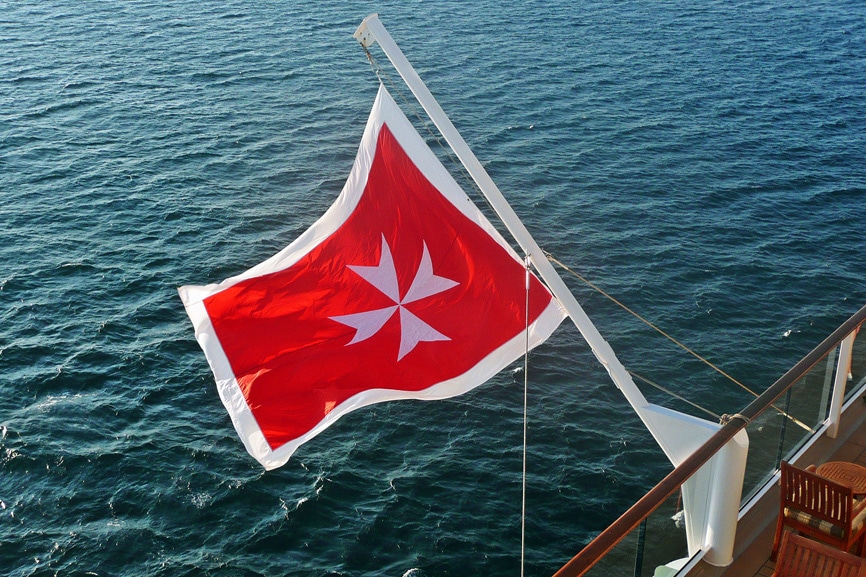
Who really influences decisions in Malta’s maritime sector? While regulators hold formal authority, a new study has found that power within the industry is largely shaped by relationships, collaboration and the ability to influence other stakeholders, with facilitators emerging as particularly influential players.
The research, conducted by Enrico D’Agostini of the World Maritime University and University of Malta academic Maria Attard, examines how power, legitimacy and urgency are distributed among the key players in Malta’s maritime logistics sector, highlighting potential weaknesses in coordination and governance.
The study is based on interviews with stakeholders across the Maltese maritime sector and looks at three main attributes: power, legitimacy and urgency.
Its findings suggest that relationships and the ability to secure the support of other players can be just as important as formal authority when it comes to influencing how Malta’s maritime sector operates.
The researchers found that legitimacy – essentially whether a stakeholder and its claims are regarded as credible and appropriate by others – was the most frequently discussed of the three attributes. Power ranked second, while urgency received considerably less attention.
The findings are particularly relevant given the economic importance of the maritime industry to Malta. Citing previous estimates, the researchers said the broader maritime sector accounts for around 14 per cent of Malta’s GDP and generates approximately $2.2 billion (€1.9 billion) in direct, indirect and induced economic impacts.
They described Malta's maritime logistics ecosystem as somewhere between an emerging and fully developed ecosystem, with further potential for growth and cooperation.
Relationships play major role in influencing decisions
The research indicates that influence within the sector is often built through relationships rather than being exercised by individual businesses acting alone.
One participant said that direct influence at company level was “extremely hard”, adding that lobbying for industry improvements through the Chamber of Commerce could prove more effective.
Another stakeholder said access to key Government players allowed their organisation to influence discussions at policy or strategic level, although its influence over actual port operations remained limited.
Another respondent explained that influence was exercised through industry associations, advisory boards and collaboration with policymakers, although they described that influence as limited.
The importance of Malta's relatively small business community also emerged from the interviews.
One participant noted that people within the business community often know one another, meaning informal or direct communication can sometimes prove as effective as formal channels in raising concerns or influencing decisions. Another said stakeholder relationships were built around professional collaboration.
Study raises questions over regulators
One of the more notable findings concerns regulators. While public authorities possess statutory powers, the researchers found shortcomings in what they describe as “validity and appropriateness” and argue that regulators are not necessarily afforded legitimacy by other participants in the maritime ecosystem.
The researchers warn that this creates a situation where businesses may comply with certain processes without necessarily demonstrating significant commitment, while no single stakeholder possesses sufficient authority to change the status quo.
The study uses port labour as an example. One respondent argued that the protected status of port workers and the ability for employment licences to be passed within families restrict competition and contribute to higher handling charges.
The researchers referred to reforms initiated in 2007 to phase out hereditary licences and subsequent changes in 2017 concerning the transfer of licences to family members.
More broadly, the study argues that formal regulatory authority alone does not necessarily make an organisation capable of coordinating Malta's maritime ecosystem effectively.
The researchers divided respondents into five groups: commercial operators, facilitators, associations, regulators and advisory stakeholders. Facilitators emerged particularly strongly across the research, recording the highest shares for power, legitimacy and urgency. Commercial stakeholders, meanwhile, were classified as “dominant”, meaning the researchers identified them as possessing legitimacy and power but lacking urgency.
The study suggests this means commercial operators are generally in a position to make legitimate claims and possess a degree of power, but do not necessarily perceive sufficient urgency to push those claims forward.
Competition from other jurisdictions was nevertheless identified as a concern, with one respondent specifically pointing towards competition with Italy.
No clear coordinator
A broader issue identified by the researchers is what they describe as the absence of a sufficiently legitimate “ecosystem orchestrator” – essentially a player capable of bringing the different parts of Malta's maritime logistics industry together.
According to the paper, where such an orchestrator lacks legitimacy and businesses have limited alternatives available to them, coordination becomes weaker and more fragile.
The authors argue that the resulting coordination gap cannot simply be filled by regulators because having statutory authority does not automatically mean they have the legitimacy afforded by other stakeholders.
This matters particularly in Malta because the country's small size means businesses, authorities, associations and other players are highly interconnected and have fewer alternatives available to them than they might in larger markets.
Researchers call for better communication
The paper identifies three main policy implications.
Among them is a need for better communication and standardised reporting between maritime stakeholders. The researchers suggest that shared reporting infrastructure, potentially through common digital platforms, could make communication between the different players easier and more efficient.
They also point towards existing European policy tools, including the Maritime Single Window, which allows ship information to be exchanged digitally.
However, the researchers argue that technology or regulation by itself will not resolve Malta's coordination issues without sufficient trust and legitimacy among the organisations involved.
Ultimately, they conclude that Malta's maritime logistics sector depends substantially on relationships between stakeholders rather than a straightforward hierarchy in which authority determines influence.
For policymakers, the challenge is therefore not only deciding who has responsibility for the sector but ensuring that the organisations expected to coordinate it have the confidence and backing of the businesses and other stakeholders operating within it.
The study was based on 16 participating stakeholders from 26 invited to take part. Interviews were carried out between March and April 2025.

Malta Chamber hits back at Clyde Caruana over ‘cheap foreign worker’ claims
Chamber says Minister's comments 'misdiagnose the root cause of Malta’s economic bottlenecks'
AI, sanctions, and sophisticated crime are reshaping financial sector’s risk, bankers told
The challenges were discussed at a Malta Bankers’ Association (MBA) conference
BNF Bank becomes Premium Partner of the Royal Malta Golf Club
The bank will become the principal sponsor of the club that welcomes more than 100 young golfers each season