


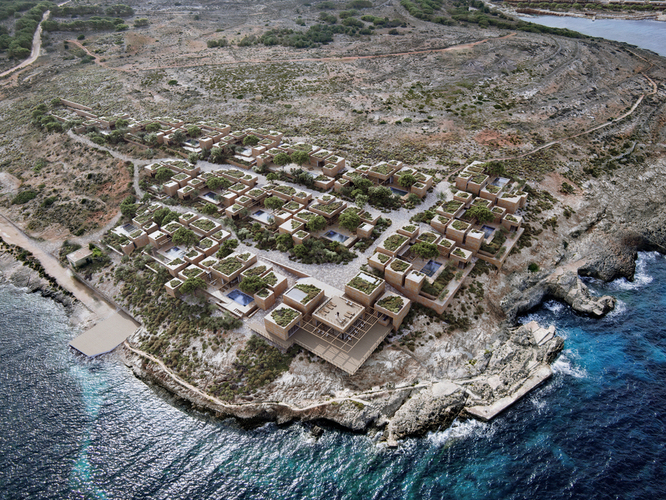
The Malta Chamber of Scientists (MCS) has expressed disappointment over the Environment and Resources Authority’s (ERA) decision to approve preliminary works and tree removal linked to a proposed development on Comino.
The Chamber said the decision paves the way for what it described as “invasive construction works”, including excavation and demolition, allowing the developer to proceed with plans for a hotel, villas and swimming pools on a protected nature reserve.
In a press release, the MCS questioned how sustainability had been taken into account during the decision-making process, arguing that a development of this scale warranted clear answers about its wider environmental impact before construction begins.
Among the concerns raised was the resort’s demand for water, particularly for its proposed swimming pools, on an island that the Chamber said has no natural freshwater capacity to spare.
The MCS also questioned the additional pressure the development could place on waste management infrastructure, the marine environment and an ecosystem already experiencing significant seasonal pressure from the influx of visitors during the summer months.
The Chamber argued that economic growth should be assessed through the framework of environmental accounting, with greater accountability for the waste and environmental costs associated with tourism and construction.
It also called for urban planning decisions to be made within a broader policy aimed at preserving and protecting Malta’s nature reserves and agricultural land. According to the MCS, public policy should focus on expanding green spaces rather than allowing them to be lost to development.
“The Comino decision runs against both principles,” the Chamber said.
The MCS separately raised concerns over the removal of mature trees as part of development projects, arguing that their environmental value cannot be adequately measured through a simple numerical replacement ratio.
A mature tree, the Chamber said, provides a combination of canopy cover, habitat, carbon storage and soil stabilisation that cannot be directly replaced by planting a fixed number of saplings.
The MCS also called for a regulatory and development model based on a holistic assessment of sustainability. It argued that the overall environmental impact of a major project should not be determined by separate entities assessing individual elements within their own limited remits. Instead, decisions should consider the cumulative impact of the development as a whole, its compatibility with the protected status of the site, and whether it is consistent with Malta’s wider environmental and sustainability objectives.
Related
More planning appeals filed in Sliema than anywhere else in Malta
St Julian’s and St Paul’s Bay followed Sliema with 32 third-party appeals each during a six-year period
Enemalta gradually restoring electricity following widespread power cut
It has not yet indicated when electricity supply is expected to be fully restored
Who really holds the power in Malta’s maritime sector? New study maps the key players
New research examines how power, legitimacy and urgency are distributed among the key players in Malta’s maritime logistics sector