


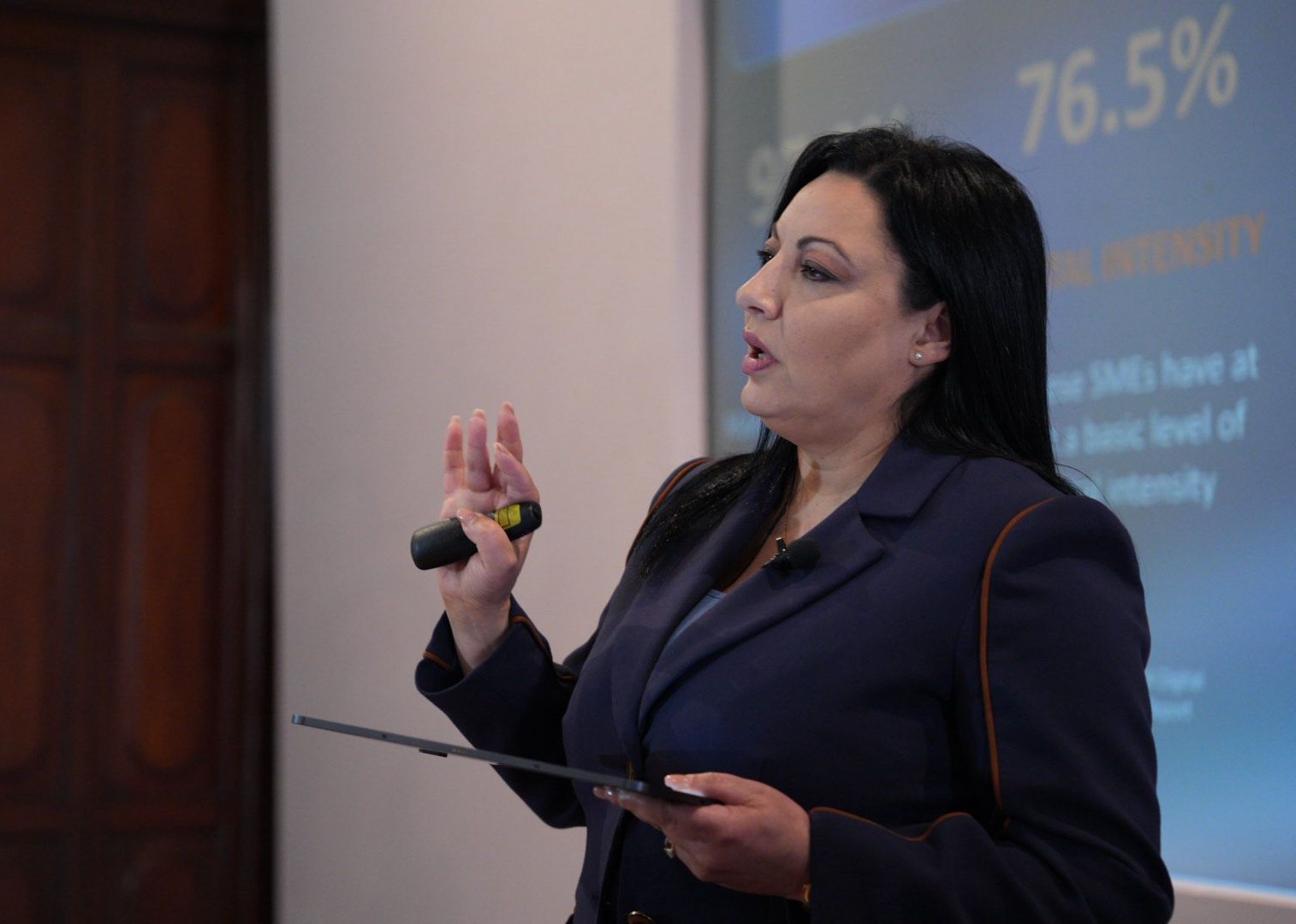
Malta continues to rank above the European Union average across several key digitalisation indicators, yet underlying gaps in implementation, skills and real-world adoption remain a concern for businesses, stakeholders heard during the IBM & Tech Trends in Maltese Businesses conference.
Addressing the opening session, the CEO of The Malta Chamber of Commerce, Enterprise and Industry Marthese Portelli set the tone for discussions focused on whether Maltese businesses are embracing digital transformation quickly enough, and, crucially, whether they are doing so effectively.
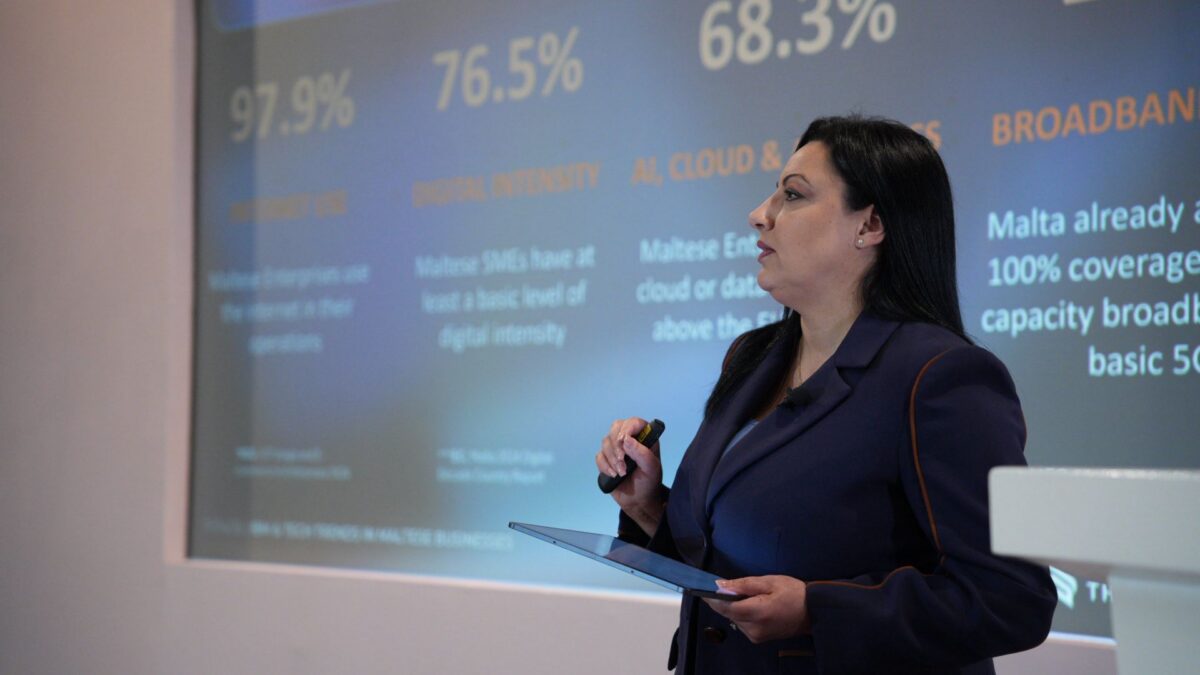
Recent data shows that digital uptake is widespread. Nearly all Maltese businesses (97.9 per cent) use the internet in their operations, while 76.5 per cent of SMEs have reached at least a basic level of digital intensity. Meanwhile, 68.3 per cent of enterprises are already making use of technologies such as artificial intelligence (AI), cloud computing or data analytics, placing Malta well above the EU average of 54.6 per cent.
Malta has also achieved full national coverage of high-capacity broadband and 5G infrastructure, positioning the country strongly from a connectivity standpoint.
However, despite these headline figures, concerns were raised that statistics may overstate the true level of digital maturity on the ground. Industry feedback suggests that actual adoption, particularly among SMEs, may be lower than reported, with many businesses still at early or fragmented stages of transformation.
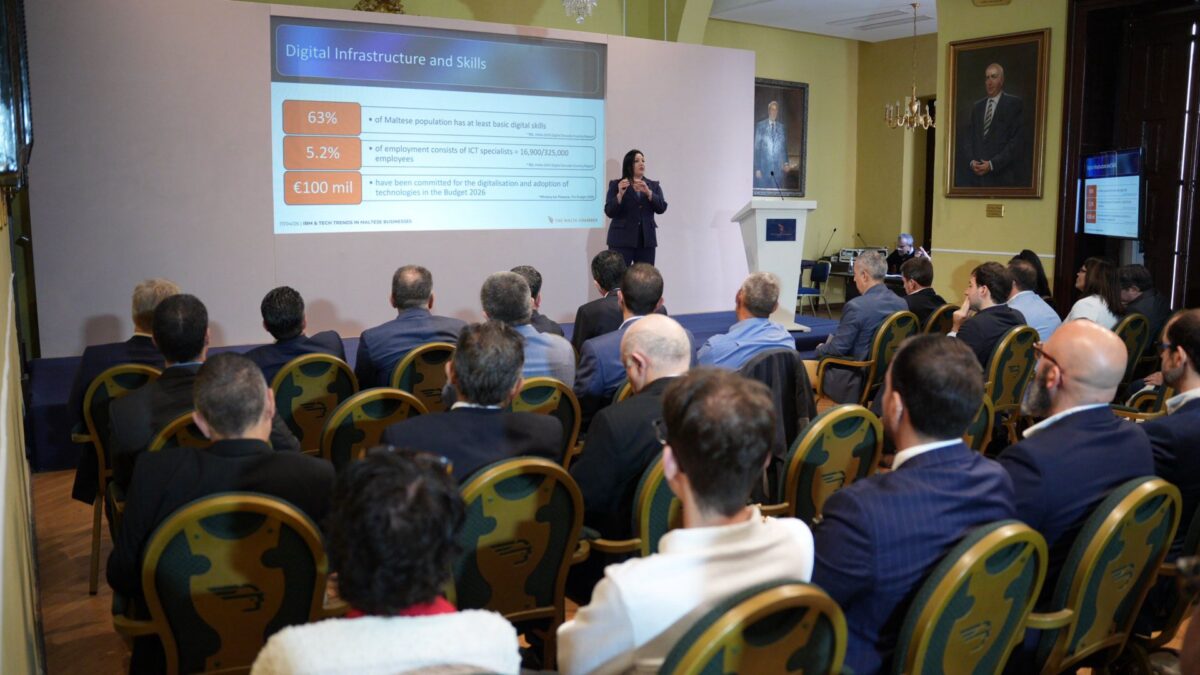
Skills remain a key constraint. While 63 per cent of the Maltese population possesses at least basic digital skills, only 5.2 per cent of total employment consists of ICT specialists, a gap that continues to limit the pace and depth of technological adoption.
The issue is compounded by structural challenges, including difficulties in integrating new technologies with legacy systems, rising cybersecurity risks, and the need for stronger governance frameworks around AI deployment.
At the same time, the opportunities are significant. AI and data-driven tools are increasingly being viewed as critical enablers of productivity and better decision-making, while cloud infrastructure and modern systems offer businesses greater flexibility and scalability. Ongoing public sector digitalisation is also expected to play a supporting role in accelerating adoption across the wider economy.
The Government has committed €100 million in Budget 2026 towards digitalisation and technology adoption, underlining the strategic importance of the sector.
The conference, organised in collaboration with IBM and other partners, brings together industry experts to present practical use cases of how technology is being deployed within Maltese organisations. Sessions focus on how AI, data and modern infrastructure can address immediate business challenges, drive growth, and support more resilient and secure operations.


More than 50 startups collectively awarded €15 million in financial assistance
These businesses have created around 250 quality jobs, Government said

Insurers call for urgent clarity over EV disposal procedures while highlighting ‘practical difficulties’
Malta currently lacks suitable facilities for treating these batteries, association said

Working remotely abroad? Businesses warned of potential tax risks at Mobility Elite Summit
Working remotely abroad is not just a matter of finding a nice place