


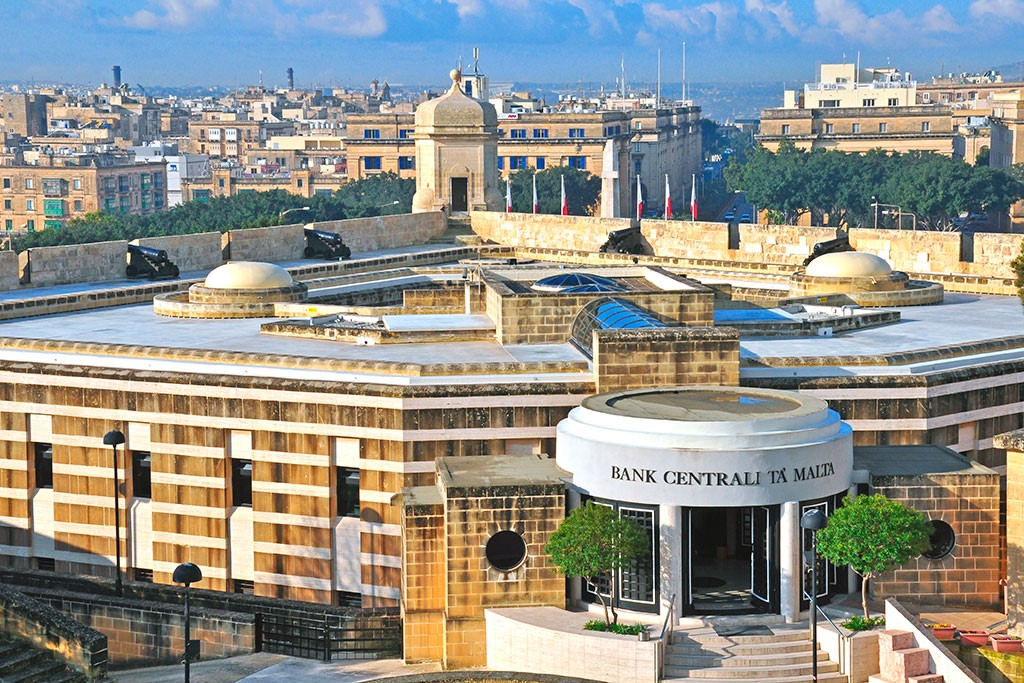
The Central Bank of Malta’s latest economic update for March indicates that annual business activity growth in February has eased slightly, aligning more closely with its long-term average. The Bank’s Business Conditions Index highlights this gradual moderation, reflecting a stabilising economic environment.
The Economic Policy Uncertainty Index, which gauges uncertainty based on Maltese news sources, increased from its January level but remained below its historical average, suggesting a relatively stable policy landscape.
Meanwhile, the European Commission’s Economic Sentiment Indicator for Malta declined in February, positioning itself below its long-term average. Similarly, the Employment Expectations Indicator saw a decrease but remained above its historical norm, indicating continued resilience in the job market.
Key sectoral insights show that in January, industrial production and retail trade maintained growth but at a slower pace compared to December. The services sector also recorded positive annual growth by the end of 2023. The labour market remained strong, with unemployment holding steady at 3.0 per cent – a historically low level.
Real estate activity showed mixed trends. In January, permits for residential buildings exceeded year-ago levels, while February saw an increase in residential promise-of-sale agreements. However, the number of final deeds remained largely unchanged.
Financial data revealed a robust banking sector, with both deposits by Maltese residents and credit granted by financial institutions expanding at a strong pace through January. Both measures posted an accelerated annual growth rate compared to the previous month.
Inflation edged higher in February, with the Harmonised Index of Consumer Prices (HICP) rising to 2.0 per cent from 1.8 per cent in January, though still below the euro area average. Core inflation, excluding energy and food, held steady at 2.0 per cent. The Retail Price Index (RPI) showed a more pronounced rise, climbing to 1.9 per cent from 1.4 per cent a month earlier.
Government finances reflected higher spending pressures, with the Consolidated Fund registering a larger deficit in January compared to a year earlier. This was driven by increased government expenditure alongside a decline in revenue.
The Central Bank’s report signals a maturing economic cycle, with steady growth in key sectors and manageable inflation levels. While some indicators reflect short-term fluctuations, Malta’s overall economic fundamentals remain solid.

Why Malta’s deferral of the OECD minimum tax could prove a long-term advantage
Malta has postponed the application of the new rules targeting large multinational companies to 2030

From Telco to TechCo: Inside Melita’s AI-powered future
With the launch of AI Solutions, the traditional Telco is boldly transforming into an innovative, technology-driven TechCo

Planning Authority launches €30 million restoration scheme
Owners of heritage properties or ones with traditional façades located in Urban Conservation Areas are eligible